
In order to minimise possible risks to patients and users, please observe these instructions carefully. Use, disinfection, cleaning and sterilisation may only be performed by suitably trained specialist personnel.
Field of of application
application We manufacture our products for operative use in various surgical disciplines. The treating doctor is responsible for the selection of medical products for certain applications in line with their correct intended purpose.
Function check
A newly purchased product must be subjected to a thorough visual and function check after its delivery and before each use, paying attention to cracks, fractures and the occurrence of corrosion. After cleaning, oil the joints of instruments prior to function testing using a paraffin-based care agent. Check instruments with joints for ease of movement. Carry out a function check in accordance with the intended application of the instrument. Defective products must not be used and must have undergone the complete preparatory treatment process again before being returned.
Warning
Medical products are delivered in a non-sterile condition and must be cleaned, disinfected and sterilised prior to their initial use.
Please observe the additional information enclosed with the products. Remove all protective sleeves and films prior to first using
Preparation for use.
The safe combination of different products or of products with implants must be reviewed prior to clinical application by the user.
Avoid improper throwing or dropping of instruments.
To prevent all contact corrosion, instruments with damaged surfaces must be separated immediately. .
If used on patients with Creutzfeldt-Jakob disease or HIV infection, we are unable to accept any responsibility for reuse.
Preparatory treatment
The person in charge of preparatory treatment is responsible for ensuring that the treatment is duly carried out using the relevant equipment, materials and personnel in the treatment facility and so achieves the desired result. This necessitates validation and routine monitoring of the process used. We urge you to take note of the national regulations dealing with instrument preparation.
Reutilisation restrictions
Frequent repeat preparatory treatment has minimal effects on the product. The end of the product life is normally determined by wear and damage due to use.
Information on instrument preparation
- Use cleaning and/or disinfection agents with a neutral pH-value. Please observe manufacturer instructions regarding dosage,
- exposure time and renewal of solutions.
- Do not use hard brushes or coarse abrasive cleaners.
- Never leave instruments in cleaning or disinfection agents for longer than the specified time.
- Only used demineralised water for rinsing.
- Carefully rinse and blow through channels and pipes.
- Sensitive instruments must be processed in a storage or clamping fixture.
Preparation at the place of use
Dismantle and/or open instruments as far as possible. Directly after use, remove coarse soiling from the products. Do not use fixing agents or hot water (> 40°C), as this results in residues becoming fixed and can affect the success of the subsequent cleaning operation. Products can be disposed of dry. Treat instruments as quickly as possible after disposal. I If instruments come into contact with corroding medicines or cleaning agents, wash these away with water immediately after use.
Ultrasound bath
All instruments must be opened, dismantled and any cavities rinsed through. Place instruments in the screen basket in such a way that overlaps and contact between instruments are avoided. Add cleaning agent to the water and adjust the temperature of the solution in line with the cleaning agent manufacturer’s instructions. Cleaning in the ultrasound bath at 35-40 kHz takes 5 minutes. Subsequently rinse instruments including all cavities before cleaning and disinfection.
Manual cleaning
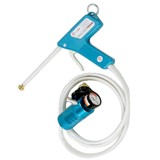
We recommend using lint-free soft cloths, plastic brushes and/or cleaning guns for manual cleaning. The cleaning agent should not have any fixing properties. The cleaning fluid must be changed daily. If possible, apply the cleaning agent into cavities at pressure and carefully brush out. Rinse with plenty of fully demineralized water.
Then dip the instrument in disinfectant and use suitable cleaning instruments such as synthetic soft brushes. Observe the cleaning agent manufacturer’s instructions. At the end of the cleaning process, repeat the rinsing action with fully demineralised water and dry completely the instruments.
Machine cleaning
Cleaning On the basis of international standards (EN ISO 15883) and national directives, only validated machine cleaning and disinfection methods may be used. Place the dismantled/opened instruments securely in the tray, ensuring that cavities are exposed for optimum access on one side.
Do not overload trays, avoid creating any overlaps. Instruments with cavities must also be fully rinsed from the inside. Do this using rinsing devices specifically designed for the instruments being treated. Preliminary rinsing (cold, if applicable fully demineralised water without additives) is followed by chemical cleaning at 40°C to 60°C for at least 5 minutes. We recommend using pH neutral or alkaline products as cleaning agents. The cleaning agents used should be selected depending on the material and properties of the instruments and in accordance with national regulations. If there is a high chloride concentration in the water, pitting and tension crack corrosion can occur in the instruments. The occurrence of this type of corrosion is minimised by using alkaline cleaning agents and demineralised water. By adding an acid-based neutralisation medium, the rinsing away of alkaline cleaning agent residues is facilitated during the first intermediate rinsing process (warm or cold water). In order to prevent the formation of deposits, it is advisable to use neutral cleaners where the water quality is unfavourable. After the second intermediate rinsing process, thermal disinfection takes place using fully demineralised water at temperatures of between 80 and 95°C, with an exposure time as outlined in EN ISO 15883.
Drying Ensure adequate drying by the cleaning and disinfection device or using other suitable measures. To avoid material-related ageing processes, the drying temperature should not exceed 95°C.
Maintenance inspection
After cooling to room temperature, the instruments must be visually inspected for protein residues and other contamination, paying particular attention to cavities, blocks, inclusions, pipes, and other inaccessible areas. Instruments which are not free of residues must be returned for a complete re-treatment process.
Carry out a functional check. Instruments with stains, which are blunt, bent, no longer function correctly or are otherwise damaged must be segregated!
Packaging Compliant
Packaging of products for sterilisation in line with ISO 11607. Packaging used must be suitable for the instruments and protect them from microbiological contamination. The seal must not be under tension.
Sterilisation
HEBUmedical recommends using a validated steam sterilisation process (e.g. steriliser in compliance with EN 285 and validated in accordance with DIN EN ISO 17665-1). When using the fractionated vacuum method, sterilisation must be performed with the 134° C/2 bar program with a minimum dwell period of 5 minutes and subsequent vacuum drying. Prior to sterilisation, products must undergo cleaning and disinfection, be rinsed without residue using demineralised water and subsequently dried. When loading, observe the recommended total weight. We recommend wrapping sieves in cloths or fleece before stowing them in the relevant containers. Following sterilisation, check the sterile product packaging for damage, and inspect the sterilisation indicators.
Storage
Store products in a dry, clean and dust-free environment at moderate temperatures from 5°C to 40°C. Protect from the effects of the sun’s rays and artificial light.
Warranty/Repair
Our products are manufactured from high-grade materials and carefully checked prior to dispatch. However, even if used properly in accordance with their intended purpose they are subject to a greater or lesser degree of wear depending on their intensity of use. This wear is technically induced and unavoidable.
Should faults occur independently of wear, please contact our customer services. Defective products should no longer be used. They must undergo the complete preparatory treatment process before being returned.
This manufacturer information and was service prepared by our suppliers:
HEBUmedical GmbH
Germany




%20(1)-160x160-state_article-rel-cat.png)