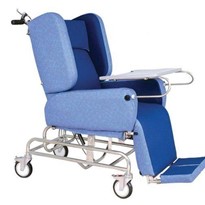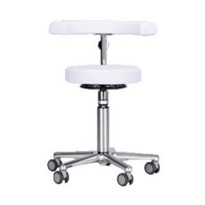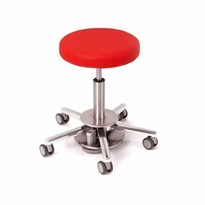


Most employees would be all too familiar with the effects of long hours spent sitting at a computer – sore neck, tense shoulders and pain down their back.
However, with correctly specified furniture, these strains don’t need to be a part of everyday life.
Ergonomic furniture aims to maximise productivity by minimising a user’s fatigue and discomfort.
"Ergonomics is that interaction between the human body and the task that you are performing," David Ridley, managing director at DAL Brands, told MedicalSearch.
"But these days ergonomics is more related to the possibility to vary your posture or your working position during the day and making sure that the tools or equipment or furniture that you’re using is adaptable enough to be able to do that."
The effects of poorly-designed furniture can be significant. For example, pain from the back, shoulders and neck can extend even further into the legs, forearms and fingers.
"It seems to me that this whole process about ergonomics is about preventing some sort of injury," Ridley said.
However, many companies are reluctant to invest in well-designed furniture which will benefit staff – there is seen to be a cost involved, so some companies compromise.
This may mean they purchase furniture which is labeled ergonomic but which may not help to reduce employees’ injuries.
"Just labeling something ergonomic seems to have gotten to the point where if something’s got lots of levers and adjustments on it, it’s deemed to be ergonomic, but that doesn’t mean it’s used correctly either," Ridley said.
"So I think there’s a lot more focus now on furniture being a bit more intuitive and also, to some extent, encouraging or inspiring people to work in postures that are less likely to cause problems."
Ergonomic furniture includes desks which are adjustable – the user can move the desk up or down with the push of a button.
When it comes to ergonomic chairs, the focus has moved from promoting one type of posture to focusing on giving the user freedom to adopt a varied range of seated positions.
"The primary focus on chairs is the type or mechanism that allows you to vary your posture to be able to more forward, sit backwards, sit a bit higher, sit a bit lower or perhaps even in a semi-standing position," Ridley said.
"Even to the point where you’re looking at chairs that lean a long way forwards so you can get your knees significantly below your hips, which is always a nice posture to adopt for part of the day."
Ridley said getting people to change their thinking and getting them into furniture which can adapt to different moods and different tasks during the day is important. This includes promoting standing positions.
"So maybe for 15 to 20 per cent of the day, standing up to work is very good for you," Ridley said.
Having adjustable furniture not only promotes a range of seated or standing positions, but it also helps to accommodate for different users. For example, short or tall people.
"I think that height adjustable furniture is something that is becoming much more popular than it was a few years ago, and that’s also being driven by the fact that the mechanisms and the types of furniture that are available have become much more reasonably priced," Ridley told MedicalSearch.
When it comes to buying ergonomic furniture, Ridley advises specifiers to look at what they need the furniture for. For example, is it for an office? Is it for a laboratory?
The ideal set-up would include a height adjustable desk and chair. Products which have an environmentally friendly background and a computer mount which can be adjusted are also ideal.
"If you’re working on a task in a laboratory and you’re in the medical field, you’re certainly looking for a chair that has more of a subtle sort of feel to the seat," Ridley said.
"It’s going to vary, but the ease of adjustability and the comfort have to be on the list."


-160x160-state_article-rel-cat.png)





-205x205.jpg)