

Funded care and new premises: what Q2 2026 told medical equipment buyers
Key Takeaways
- The Budget put money behind care: The 12 May 2026 Federal Budget committed $3.7 billion to aged care, made Medicare Urgent Care Clinics permanent, and staged major NDIS reforms, shaping where clinical demand and equipment spend are heading.
- Demand sat where care is essential: On MedicalSearch, interest concentrated in mobility equipment, with mobility scooters the clear standout, alongside wheelchair lifts, stair lifts, and hoists, while respiratory equipment such as oxygen concentrators held firm.
- The equipment driver is AT-HM: Support at Home's Assistive Technology and Home Modifications scheme is the direct pull behind mobility, bathroom safety, pressure care, and transfer equipment.
- Fitout enquiries are the forward signal: Clinic fitout enquiries ran close to double the level seen at the start of the year, a leading indicator of new premises and equipment demand still to come.
- Demand is system-led, not just policy-led: An ageing population and a capacity shortfall are driving demand that was in motion before this Budget and will outlast it.
The second quarter of 2026 was an unusually loud one for anyone buying or supplying medical equipment. A Federal Budget landed in the middle of it, funded-care reform reset the demand picture for aged care and the NDIS, and enquiry patterns on MedicalSearch pointed to where activity is happening now and where it is heading next. If you supply equipment or run a practice, the signals from Q2 are worth reading closely, and worth keeping apart, because current demand and the forward pipeline are two different things. This report pulls the quarter together into a practical view.
The Budget put money behind care
On 12 May 2026, the Government handed down a Budget it framed around care. It committed a $3.7 billion aged care package, including $1.7 billion in capital subsidies to incentivise the construction of up to 5,000 aged care beds a year, made Medicare Urgent Care Clinics permanent with $1.8 billion over five years, and directed $25 billion in additional Commonwealth funding to public hospitals, reaching $220 billion across 2026-27 to 2030-31.
For an equipment supplier, though, the headline personal-care funding line is not the main event. The more direct driver is Support at Home's Assistive Technology and Home Modifications (AT-HM) scheme, which gives older Australians separate access to assistive technology and home modifications without drawing down their quarterly care budget. That is the pull behind mobility aids, bathroom safety, pressure care, transfer equipment, hoists, and rails. Allied health sits upstream of much of this: occupational therapists and physiotherapists prescribe the equipment and assess the home modifications, so growth in those practices feeds the same demand. One honest caveat: AT-HM items sit under independence services, so depending on income and assets a participant may still contribute toward the equipment even where the clinical prescription and wraparound services are fully funded. It is fairer to call these categories funding-adjacent than uniformly free.
Demand sat where care is essential
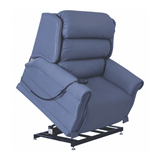
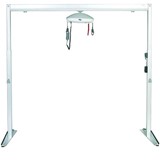
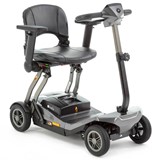
On MedicalSearch, interest concentrated in essential care categories. Mobility equipment drew stronger interest, with mobility scooters the clear standout, alongside wheelchair lifts, stair lifts, and hoists. Respiratory equipment such as oxygen concentrators held firm.
The reason is straightforward. This is the equipment that funded, home-based, and aged care runs on. As money flows toward keeping older Australians supported, increasingly at home under Support at Home, the gear that delivers that care is what providers and families buy. On respiratory specifically, "held firm" is best read as steady demand from chronic disease, home oxygen programs, and aged care oxygen funding together, not something the Budget alone explains. Suppliers can see the range buyers are comparing across the mobility scooter and oxygen concentrator categories.
Demand is system-led, not just policy-led
It would be a mistake to pin all of this on the Budget. The system is short on capacity: reporting put almost 3,300 aged care patients stranded in public hospitals between February and April 2026, up around 35% in roughly six months, because there was nowhere for them to go. Demand for beds, home support, and the equipment behind both is driven by an ageing population and a supply shortfall, forces in motion well before this Budget and ones that will outlast it. State programs add to the pressure too: NSW announced a $400 million health asset and equipment renewal program to replace and upgrade medical equipment and clinical systems, a separate, capital-led channel of demand running alongside the aged care story.
The forward signal: fitouts
The more telling change was in fitouts. Clinic fitout enquiries ran close to double the level seen at the start of the year. That matters because a fitout is a different thing from a one-off purchase: a clinic quoting a full fitout is opening or expanding, not replacing a worn-out machine. So it is a leading indicator of new premises, and of equipment demand still to come.
Causality is worth keeping tight here. The Budget made Medicare Urgent Care Clinics permanent, expanding the network toward 137 clinics, and new urgent care clinics and genuinely new GP clinics are the strong fitout link. The separate rise in bulk-billing, with the national GP bulk-billing rate reaching about 81.9% in the March 2026 quarter, is mostly existing practices changing billing model, not new premises. That is an access and utilisation story, not a fitout one, and the two are worth keeping apart. Providers scoping a build can compare medical fit-out specialists and frame the budget with the medical clinic fitout costs guide.
Allied health is the segment to watch
Allied health is where the fitout signal points most directly. New physiotherapy, podiatry, occupational therapy, and exercise physiology practices, and multidisciplinary clinics that house several of them, are exactly the kind of new premises a fitout surge foreshadows. They fit out with treatment tables, rehab and gait equipment, and modality and assessment gear, a full room rather than a top-up. This is a segment aligned with the fitout and funded-care drivers rather than a confirmed Q2 movement, so it is worth letting enquiry data confirm the trajectory before leaning on it. Providers planning a multi-disciplinary build should factor the NDIS reform trajectory into their room mix, as set out in the NDIS allied health super-clinic fit-out buying guide.
Telling "now" apart from "coming"
The most useful discipline in reading Q2 is keeping the threads apart. Mobility and respiratory interest is demand happening now. Fitout activity is a forward signal: a clinic speccing a build today is telling you about premises that will open and equip later. Read both as the same thing and you either over-read current sales or under-prepare for the pipeline.
| Q2 2026 signal | Type | What it means for buyers and suppliers |
|---|---|---|
| Mobility and respiratory interest | Demand now | Near-term volume in funded and funding-adjacent essentials |
| Fitout enquiries near double | Forward signal | New premises and full-room equipment coming |
| $3.7bn aged care, $25bn hospitals | Funding direction | Sustained demand for beds and clinical kit |
| NDIS reform | Watch item | More documentation and clinical justification in quoting |
A realistic scenario
Picture an equipment supplier reading its Q2 enquiry data. Mobility scooters, hoists, and oxygen concentrators are moving now, driven by AT-HM and home-based aged care, so stock, service, and lead times on those essentials need to be right today. At the same time, fitout enquiries have run close to double the start-of-year level, which is not a sale yet but a signal: clinics and aged care builds that will need full-room equipment over the next few quarters.
The supplier that reads both threads correctly keeps its essentials pipeline stocked for immediate demand while building full-room capability, project support, and realistic lead times for the fitout wave to come. One watch item sits over all of it: NDIS reform. Tighter eligibility and standardised assessments do not necessarily mean less equipment demand, but they mean more documentation and clinical justification, which affects quoting and cash-flow timing. For buyers running a fitout, the same build-out means more competition for installer and supplier time, so locking in scope and timing early is the practical defence.
Frequently asked questions
What medical equipment saw the most demand in Q2 2026?
On MedicalSearch, interest concentrated in essential care categories: mobility equipment led, with mobility scooters the clear standout, alongside wheelchair lifts, stair lifts, and hoists, while respiratory equipment such as oxygen concentrators held firm. This is the gear that funded, home-based, and aged care runs on.
What is driving mobility and home-modification equipment demand?
The direct driver is Support at Home's Assistive Technology and Home Modifications (AT-HM) scheme, which lets older Australians access assistive technology and home modifications separately from their quarterly care budget. Allied health sits upstream, since occupational therapists and physiotherapists prescribe the equipment and assess the modifications.
Why are fitout enquiries significant?
A fitout is different from a one-off purchase: a clinic quoting a full fitout is opening or expanding, not replacing a worn-out machine. With fitout enquiries running close to double the start-of-year level, this is a leading indicator of new premises and equipment demand still to come, rather than demand happening now.
Does the Budget explain all the demand?
No. Demand is system-led as much as policy-led. An ageing population and a capacity shortfall, with almost 3,300 aged care patients stranded in public hospitals between February and April 2026, were in motion before this Budget and will outlast it. State programs such as NSW's $400 million equipment renewal add a separate capital-led channel.
How should suppliers respond to NDIS reform?
Tighter eligibility and standardised assessments do not necessarily reduce equipment demand, but they mean more documentation and clinical justification, which affects quoting and cash-flow timing. Suppliers should prepare for longer approval trails on funded equipment rather than assume the previous quoting environment continues unchanged.
What matters most
Q2 2026 handed the sector two distinct signals that should not be blurred together. The near-term volume is in mobility and respiratory, the funded and funding-adjacent essentials, with AT-HM the mechanism worth understanding. The fitout surge is a heads-up: have full-room capability, lead times, and project support ready for the clinics, hospital renewals, and aged care builds landing over the next few quarters. Keep NDIS reform on the watch list for its effect on documentation and quoting. Read current demand and the forward pipeline as the same thing and you misjudge both; keep them apart and Q2 points to disciplined preparation for a funding direction that is now clearly set.
Positioning for the funded-care and fitout pipeline? Get quotes from medical fit-out and equipment suppliers across Australia here.
-160x160-state_article-rel-cat.png)