
Key takeaways
Factor | Typical Range / Value | Buyer Implication |
|---|---|---|
Handheld / wireless probe |
$2,500 - $8,000 AUD (2026) |
Lowest cost; best portability; limited to basic B-mode and simple assessments |
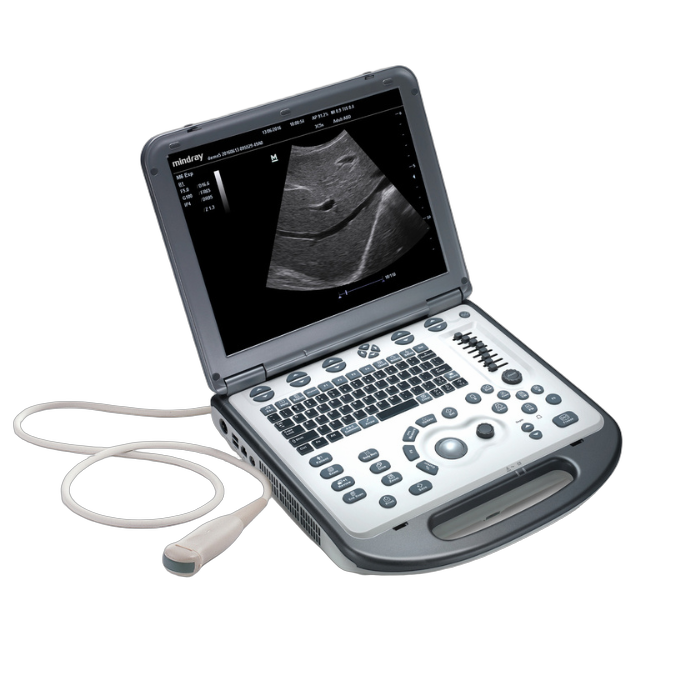
Portable laptop-style |
$8,000 - $25,000 AUD |
Best balance of portability, image quality and diagnostic range for general practice |
Cart-based system |
$25,000 - $60,000+ AUD |
Highest image quality; multiple probes; advanced modes; justified at 10+ scans/week |
Image quality ranking |
Cart > Portable > Handheld |
Processing power and probe quality drive image resolution; cart systems lead at equivalent price points |
Portability ranking |
Handheld > Portable > Cart |
Handheld fits in a pocket; portable in a bag; cart requires a dedicated room or trolley |
Colour Doppler availability |
Standard on portable and cart; limited on handheld |
Colour Doppler is needed for cardiac, vascular and many abdominal assessments |
Introduction
Veterinary ultrasound comes in three distinct form factors, and the one you choose determines your image quality ceiling, diagnostic range and how the machine fits into your clinical workflow. In 2026, the handheld wireless probe category has expanded rapidly, giving mobile vets a pocket-sized scanning tool for under $5,000. Meanwhile, portable laptop systems remain the workhorse for Australian general practices, and cart-based systems continue to deliver the image quality and multi-probe capability that referral practices and high-volume clinics require. Choosing the wrong form factor limits what you can diagnose or leaves you paying for capability you never use.
This comparison guide maps all three form factors against the clinical, workflow and financial criteria that drive the purchasing decision. Compare veterinary ultrasound machines from verified Australian suppliers on MedicalSearch once you have confirmed which form factor fits your practice.
Clinics facing this decision:
- General practices deciding between portable and cart-based for their first ultrasound
- Mobile and equine vets choosing between handheld and portable for field scanning
- Practices upgrading from an aging portable and weighing the step up to cart-based
- Multi-site practices standardising ultrasound equipment across locations
Match form factor to your clinical needs
Before comparing brands or prices, confirm what you will actually scan and where. The clinical application and scanning environment determine the right form factor.
Clinical Use | Recommended Form Factor | Why |
|---|---|---|
FAST scans, pregnancy confirmation, basic triage |
Handheld or portable |
Quick yes/no answers; image quality is secondary to speed and access |
Full abdominal scans, soft tissue assessment |
Portable or cart-based |
Requires higher resolution, adjustable settings and Colour Doppler |
Cardiac (echocardiography) |
Cart-based |
Phased array probe, M-mode, spectral Doppler needed; handhelds cannot deliver this |
Equine reproductive / field work |
Portable (rugged) or handheld |
Must withstand field conditions; battery life and dust/water resistance are critical |
Choose portable if you need a single machine that covers 80% of general practice ultrasound applications. A laptop-style system with microconvex and linear probes handles abdominal, reproductive, basic musculoskeletal and FAST scans. It moves between rooms on a trolley or between sites in a carry bag.
Choose cart-based if your practice offers cardiac imaging, performs referral-level diagnostics or scans 10+ patients per week. The larger screen, multiple active probe ports and advanced processing modes deliver the image quality and efficiency that justifies the higher investment.
Evaluate the key specifications
With your form factor confirmed, these are the specs that differentiate machines within each category.
Specification | Handheld | Portable | Cart-Based |
|---|---|---|---|
Screen size |
5-7" (tablet) |
10-15" |
15-21" |
Probe ports |
1 (built-in) |
1-2 |
2-4 |
Imaging modes |
B-mode, some Colour |
B, M, Colour Doppler, PW |
Full suite including CW, tissue harmonics, 3D/4D |
Weight |
200-400 g |
3-8 kg |
50-120 kg |
Battery life |
1-3 hours |
2-4 hours |
N/A (mains powered) |
DICOM export |
Limited / app-based |
Standard |
Full DICOM 3.0 |
Understand the full cost breakdown (2026 prices)
Purchase price is only part of the picture. Probe availability and replacement cost vary significantly across form factors.
Category | Handheld | Portable | Cart-Based |
|---|---|---|---|
System cost (new) |
$2,500 - $8,000 |
$8,000 - $25,000 |
$25,000 - $60,000+ |
Additional probes |
N/A (fixed probe) |
$2,000 - $8,000 each |
$3,000 - $12,000 each |
Annual running costs |
$200 - $500 |
$500 - $2,000 |
$1,000 - $3,000 |
5-year TCO (system + probes + running) |
$3,500 - $10,500 |
$13,500 - $40,000 |
$33,000 - $80,000+ |
The cost-per-scan metric matters more than purchase price for high-volume practices. A $50,000 cart system doing 10 scans per week at $250 each generates $130,000/year in revenue against $2,500/year in running costs. A $5,000 handheld doing the same volume would struggle with image quality on complex cases and limit billable scan types. Match system capability to the revenue opportunity, not just the upfront cost. Request quotes for all three form factors on MedicalSearch to compare pricing for your clinical requirements.
Decision framework - handheld vs portable vs cart-based
Decision Factor | Handheld | Portable | Cart-Based |
|---|---|---|---|
Budget under $10,000 |
Best fit |
Entry models |
Not viable |
Field / mobile use |
Best fit |
Suitable |
Not suitable |
Full abdominal diagnostics |
Limited |
Suitable |
Best fit |
Cardiac imaging |
Not suitable |
Basic only |
Best fit |
10+ scans/week |
Not suitable |
Viable |
Best fit |
Multi-probe flexibility |
Single probe only |
1-2 probes |
2-4 probes |
Referral-level image quality |
Not suitable |
Moderate |
Best fit |
Evaluate suppliers
You are ready to go to market. Use this checklist to assess each supplier against the same criteria.
Factor | What to Ask |
|---|---|
All form factors available |
Does the supplier offer handheld, portable and cart-based so you can compare on equal terms? |
Live demonstration |
Can you see each form factor scanning a live animal or equivalent phantom at your clinic? |
Probe options |
What probes are available per platform, and can you add probes later? |
Image export |
Does each form factor support DICOM export to your practice management software? |
Training |
Is clinical scanning training included with purchase? |
Warranty |
What is the warranty period on console and probes? |
Service in your state |
Is there a local service team in NSW, VIC, QLD, WA or SA? |
Loaner during repair |
Is a loaner unit available if your machine needs service? |
Trial / rental |
Can you trial or rent each form factor before committing to purchase? |
Upgrade path |
If you start with portable, can you trade in or upgrade to cart-based with the same supplier later? |
Frequently asked questions
Can a handheld ultrasound probe replace a full portable system?
For FAST scans, pregnancy checks and basic triage, yes. For full abdominal diagnostics, musculoskeletal imaging or anything requiring Colour Doppler, a portable or cart-based system is needed. Most practices use handheld as a supplement, not a replacement.
At what scan volume does cart-based justify the cost premium over portable?
At 10+ scans per week, the revenue generated easily covers the price difference between a $15,000 portable and a $40,000-$60,000 cart system within 12-18 months. The image quality and multi-probe workflow also support higher billable fees per scan.
Is a portable system good enough for cardiac imaging?
Some mid-range portable systems offer basic M-mode and Colour Doppler for screening-level cardiac assessment. Full echocardiography with spectral Doppler and tissue Doppler imaging requires a cart-based system with a phased array probe.
What is the typical lifespan difference between form factors?
Handheld probes last 3-5 years with field use. Portable laptops last 5-8 years. Cart-based systems last 8-12 years with regular servicing. The longevity advantage of cart-based systems lowers the annualised cost of ownership.
Can i start with handheld and upgrade to portable or cart-based later?
Yes. Many practices start with a handheld for $3,000-$5,000 to validate scan demand and clinical workflow, then invest in a portable or cart system once volume justifies the upgrade. The handheld remains useful as a triage and backup tool.
Summary
- Handheld probes ($2,500-$8,000) suit FAST scans, pregnancy checks and field triage
- Portable laptop systems ($8,000-$25,000) are the general practice workhorse for abdominal, reproductive and basic imaging
- Cart-based systems ($25,000-$60,000+) deliver referral-level image quality with multi-probe capability for cardiac and advanced diagnostics
- Match form factor to your clinical application first, then compare within that category
- Cart-based systems justify the premium at 10+ scans per week through higher-quality diagnostics and billable fees
- A handheld is a valid starting point for demand validation before investing in a larger system
Ready to source your veterinary ultrasound machine?
Don't waste time contacting suppliers individually. MedicalSearch gives you direct access to verified Australian veterinary ultrasound suppliers - compare models, specs and pricing in one place, then request quotes from suppliers best matched to your clinic.
- Compare models - filter by form factor, probes and region
- Request quotes - contact multiple verified suppliers with a single enquiry
- Contact suppliers directly - speak to specialists who service your state
→ Compare Veterinary Ultrasound Machines on MedicalSearch Now →