

Enhance upper limb rehabilitation for stroke survivors – by practicing real-life tasks instead of just playing computer games.
Picture trying to pick up your morning coffee cup, but your arm won’t move how you want it to. This is a daily reality for many people recovering from stroke or brain injury. However, help might be coming, thanks to an innovative approach that pairs robots with therapists to make rehabilitation more effective.
REAL OBJECTS BEATVIRTUAL REALITY
Most robotic therapy systems today are designed to be fully automated, from the movement selection to the type and level of assistance. However, this approach is limited, as having a fully autonomous robot to consistently determine the best training approach for individuals in any situation is unrealistic.
Current rehabilitation robotics also focuses on repetitive movements or virtual reality games. While these can help, they miss something crucial: the experience of interacting with real objects. “When you reach for a real cup, your brain has to do much more than just move your arm,” explains the research team. “You need to look at the cup, judge how far away it is, and plan exactly how to grasp it.”
MEET THE ArmMotus™ EMU
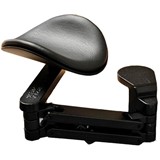
The star of this research is a robot called the EMU (currently commercialized under Fourier Rehab as the ArmMotus™ EMU). Unlike other rehabilitation robots that take control away from therapists, EMU is designed to be a helpful assistant. It attaches to a patient’s forearm and can perform:
- Deweighting mode: Help support the arm’s weight
- Passive mode: Guide the arm through specific movements
- Corrective mode: Keep movements on the right path while letting patients do the work themselves
HOW IT WORKS
Instead of following pre-programmed exercises, therapists can customize everything for each patient. They show the robot the exact movement they want the patient to practice by moving the robot’s arm, almost like teaching a dance move. Then, they can adjust how much help the robot provides.
Theresults show seven times as much repetition as in a typical therapy session.Patients in the study performed an average of 218 movements per session—farmore than the typical 32 movements in standard therapy. And they did thiswithout needing video games to stay motivated. Instead, they were excited tosee real progress in meaningful tasks, like reaching for objects or bringing awater bottle to their mouths.
KEY FINDING
The researchers share a particularly encouraging observation: even when patients couldn’t perform a movement correctly at first, they usually succeeded after several tries. This suggests that, with the right support and feedback, the brain can learn to develop the appropriate movement patterns through practice.
WHAT MAKES THIS APPROACH SPECIAL?
Three key things set this therapy apart:
- Real-World Practice: Patients work with actual objects instead of just following dots on a screen
- Personalized Approach: Therapists can customize every aspect of the training for each patient
- Perfect Partnership: Instead of replacing therapists, the robot works alongside them, like having an extra pair of hands that never gets tired.
LOOKING AHEAD
Incorporating everyday objects into robotic training activates additional brain functions beyond basic movement execution. It taps into the perception-action process, where the brain evaluates an object’s characteristics and develops a motor plan to complete the task in context. Including this approach in robotic training could be a promising way to bridge the gap between intensive robotic exercises and real-world functional outcomes.
The research team is now exploring how this approach could help more people. While the current study used one-on-one sessions with therapists, future versions might allow some patients to practice with remote supervision once they’ve learned the basics.
For people recovering from stroke or brain injury, this research offers hope for more effective rehabilitation. By combining the precision of robots with the expertise of human therapists, patients can regain more function and return to their daily activities more quickly.
The study was conducted at a major teaching hospital, working with physical and occupational therapists to help patients with various neurological conditions. While more research is needed, the results suggest this could be a promising new direction in rehabilitation therapy.







-205x205.jpg)
-205x205.jpg)