
Key takeaways
- Purchase price range: $20,000-$60,000 for a standalone FPD panel; full DR room systems with integrated FPD range from $80,000-$300,000+ (AUD 2026).
- Scintillator choice: CsI panels generally deliver lower radiation dose and superior resolution vs GOS, typically in the 10-30% range depending on application, but cost 20-25% more - the correct specification for high-volume clinical and veterinary applications.
- Wired vs wireless: Wireless panels add $8,000-$15,000 to purchase price and suit multi-room or mobile workflows; wired panels are the correct specification for fixed single-room installations.
- Panel size standard: 14×17 inch (35×43 cm) covers the majority of general radiography applications - confirm your clinical application before specifying a non-standard size.
- Retrofit path: A DR retrofit FPD added to an existing analogue or CR room costs $20,000-$40,000 - the most cost-effective upgrade path for practices with a serviceable generator and tube.
- TGA compliance: All FPDs sold in Australia must be listed on the ARTG - require ARTG number confirmation from every supplier before purchase.
- ARPANSA compliance: Radiation safety testing is required at commissioning and periodically thereafter under state-based regulation (typically $1,500-$3,500 per test) - confirm testing frequency with your state authority and budget this as a recurring cost.
- Pixel pitch range: 99-200 microns across current market panels - lower pixel pitch generally improves spatial resolution, though overall image quality also depends on detector design (DQE, MTF), making it the preferred specification for orthopaedic and chiropractic applications.
Why Australian practices are upgrading to flat panel detectors
Flat panel detectors are now the standard imaging receptor for digital radiography across Australian medical, chiropractic, and veterinary practices - and the upgrade cycle from CR and analogue systems is accelerating as detector prices fall and ARTG-compliant panels from major manufacturers become available in the $20,000-$40,000 range. FPDs deliver images in 3-5 seconds vs 45-90 seconds for CR plate scanning, with lower patient dose potential and reduced retake rates in most clinical environments. The procurement decision in 2026 is not whether to upgrade - it is which panel configuration, scintillator, and integration path is correct for your room setup and clinical volume. The DR vs CR cost and ROI comparison guide covers the per-image economics in detail if you are still at the technology decision stage.
This guide is for practice managers, radiology leads, and clinic owners evaluating a flat panel detector purchase or DR upgrade in Australia. It covers panel types, key specifications, 2026 pricing, compliance requirements, and supplier evaluation. Practices using FPDs across Australia include:
- GP clinics and primary care practices upgrading from CR or analogue systems
- Chiropractic and sports medicine practices requiring high-resolution spinal and orthopaedic imaging
- Radiology and diagnostic imaging centres expanding capacity or replacing end-of-life panels
- Veterinary hospitals and mixed-practice clinics - large and small animal applications
- Orthopaedic, emergency, and specialist clinics requiring rapid image turnaround
Choose your panel configuration
Before costing anything, confirm which panel type suits your room setup, clinical workflow, and portability requirements. This choice sets your price bracket and most of the specifications that follow.
Panel Type | Price Range (AUD) | Best For |
|---|---|---|
Wired FPD (fixed) |
$20,000-$35,000 |
Fixed single-room setups - lower cost, no battery management |
Wireless FPD |
$28,000-$60,000 |
Multi-room, mobile, and mixed-environment practices |
Retrofit DR kit |
$20,000-$40,000 |
Existing analogue or CR room with serviceable generator and tube |
Veterinary FPD |
$18,000-$45,000 |
Large and small animal imaging - ruggedised, portable configurations |
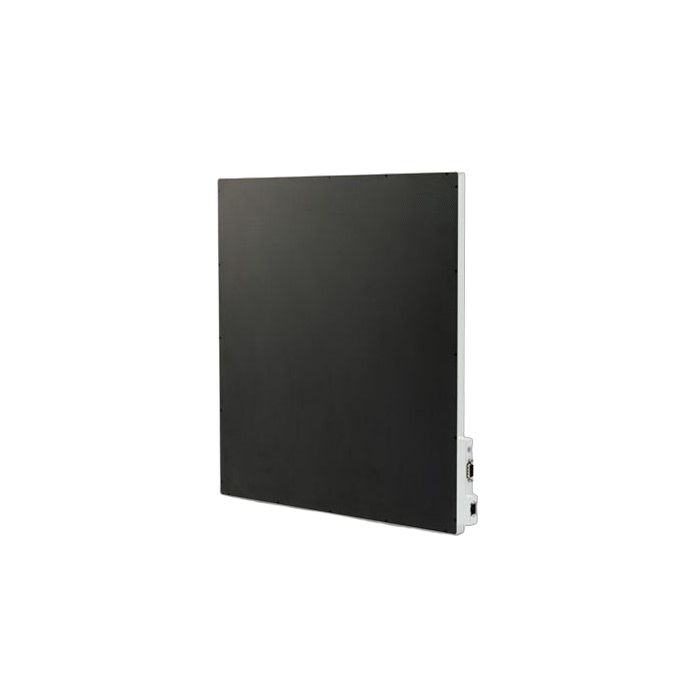
Choose a wired FPD if your practice has a dedicated X-ray room, a fixed Bucky table or wall stand, and a predictable single-room workflow. Wired panels eliminate battery management, charge cycle planning, and the wireless connectivity troubleshooting that adds complexity in multi-system environments.
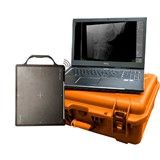
Choose a wireless FPD if your practice operates across multiple rooms, uses a mobile X-ray unit, or requires the panel to move between clinical areas. Wireless flexibility comes at a $8,000-$15,000 premium - justified where the panel is genuinely shared across rooms or used in mobile applications.
Once you have confirmed your panel type, get quotes for flat panel detectors on MedicalSearch to compare configurations from verified Australian suppliers.
Evaluate the key specifications
With your configuration confirmed, these are the specifications that determine whether a given panel fits your clinical application and compliance requirements.
Specification | Typical Range | Buyer Consideration |
|---|---|---|
Pixel pitch |
99-200 microns |
Lower pitch = higher spatial resolution - 99-140 microns for orthopaedic and chiro; 150-200 microns adequate for general radiography |
Scintillator material |
CsI or GOS |
CsI delivers 10% lower dose and better resolution at 20-25% higher cost - correct specification for high-volume clinical environments |
Panel size |
10×12 to 17×17 inch |
14×17 inch covers most general radiography needs - confirm against your clinical application before specifying non-standard sizes |
Image capture time |
2-5 seconds |
Sub-3-second preview is the operational standard for high-volume practices - confirm at your typical exposure settings |
IP rating |
IP54-IP67 |
IP67 mandatory for veterinary and mobile applications - IP54 adequate for fixed clinical room use |
Weight |
2.8-4.5 kg |
Panels above 4 kg create fatigue in high-volume mobile or veterinary use - confirm at your expected daily lift frequency |
PACS/software compatibility |
DICOM 3.0 standard |
Confirm compatibility with your existing PACS before purchase - not all panels integrate seamlessly with third-party RIS/PACS systems |
Understand the full cost breakdown (2026 prices)
Purchase price is only part of the picture - most cost models submitted for approval miss ARPANSA compliance testing and PACS licensing as recurring line items. Here is the full breakdown.
Category | Price Range (AUD) | Notes |
|---|---|---|
Wired FPD panel |
$20,000-$35,000 |
GOS entry to CsI mid-range; confirm ARTG listing before purchase |
Wireless FPD panel |
$28,000-$60,000 |
CsI standard at this price point; includes AED and battery pack |
Retrofit DR kit |
$20,000-$40,000 |
Panel plus integration software; generator and tube not included |
Installation and commissioning |
$1,500-$5,000 |
Often excluded from quoted price - confirm before signing |
Annual service contract |
$2,000-$6,000 |
Varies by brand and service tier; confirm parts and labour inclusions |
ARPANSA compliance testing |
$1,500-$3,500/year |
Mandatory - administered through state regulators (NSW EPA, VIC DHHS, QLD Health) |
PACS/software licensing |
$2,000-$8,000/year |
Cloud-based PACS; on-premise adds $5,000-$15,000 in server hardware |
Panel replacement (year 8-10) |
$20,000-$60,000 |
Budget for one replacement in a 10-year ownership cycle |
Five-year TCO on a mid-range wireless FPD purchased at $40,000 typically runs $80,000-$110,000 all-in once servicing, ARPANSA testing, and PACS licensing are included. The two line items most consistently absent from initial approval submissions are ARPANSA compliance testing and PACS licensing - together adding $3,500-$11,500 per year on top of the service contract. For a wireless FPD at $28,000-$60,000, get quotes for flat panel detectors to compare service contract inclusions and ARTG compliance status before approval.
Plan the asset - depreciation and financing
The ATO effective life for diagnostic imaging equipment including flat panel detectors is 10 years - diminishing value rate 20%, prime cost rate 10%. Most FPD panels exceed the $20,000 instant asset write-off threshold for the 2025-26 financial year and depreciate under standard diminishing value. Entry-level wired panels and retrofit kits at $20,000-$25,000 may fall within or near the threshold depending on final installed cost - confirm with your accountant. Residual value at 8-10 years is typically 5-15% of purchase price for well-maintained panels with documented service records.
Operating lease and hire-to-own structures are available from approximately $800-$1,500/month for a $35,000-$60,000 system over 48-60 months - appropriate for new practices or where patient volume is still building. The X-ray machine buying guide covers financing structures for the broader DR system context.
Evaluate suppliers
You are ready to go to market. Use this checklist to assess each supplier against the same criteria.
Factor | What to Ask |
|---|---|
ARTG registration |
Can you provide the ARTG listing number for this panel confirming TGA registration? |
PACS compatibility |
Has this panel been validated with my existing PACS and RIS software - and who resolves integration issues? |
ARPANSA compliance path |
Do you assist with ARPANSA commissioning documentation, or does the practice arrange this independently? |
Service contract scope |
Does the service contract cover parts, labour, and preventive maintenance - or call-out only? |
Local service coverage |
Do you have a technician based in my state, or is service dispatched from interstate? |
Installation inclusions |
Is installation, system integration, and operator training included in the quoted price? |
Scintillator specification |
Is the panel CsI or GOS? Can you supply the DQE curve at relevant exposure levels for my application? |
Warranty terms |
What is the warranty period and does it cover the detector panel specifically - not just the electronics? |
Retrofit compatibility |
If retrofitting: has this panel been validated on my existing generator and tube model? |
Panel replacement cost |
What is the current replacement cost for this panel at end of life, and is a trade-in program available? |
Frequently asked questions
What does a flat panel detector cost in Australia in 2026?
Wired FPD panels range from $20,000-$35,000; wireless panels range from $28,000-$60,000 depending on scintillator, pixel pitch, and brand. Budget a further $1,500-$5,000 for installation and commissioning, which is routinely excluded from supplier quotes.
When should i choose a CsI flat panel detector over a GOS panel for my practice?
Choose CsI when your application requires the lowest achievable patient dose, high spatial resolution for orthopaedic or spinal imaging, or when daily imaging volume exceeds 15-20 exposures. GOS is acceptable for low-volume general radiography where the 20-25% cost saving over CsI is a genuine budget constraint.
Is ARPANSA compliance testing mandatory for all flat panel detector installations in Australia?
Yes - ARPANSA radiation safety compliance testing is mandatory for all X-ray systems including FPD-equipped rooms, administered through state regulators at $1,500-$3,500 per year. Commissioning testing is also required before clinical use begins - confirm who arranges this with your supplier before purchase.
Can a retrofit flat panel detector work with my existing x-ray room equipment?
Retrofit FPDs are often compatible with existing generators and Bucky tables, but are not universally vendor-neutral - generator compatibility, interface requirements, and software integration must be validated before purchase. Ask your supplier for documented compatibility confirmation specific to your existing equipment model, not a general claim.
What TGA compliance documentation should i require from a flat panel detector supplier?
Require the ARTG listing number confirming TGA registration before signing any purchase agreement - purchasing an unregistered device for clinical use is a regulatory breach in Australia. Suppliers should be able to provide this immediately; any hesitation or delay is a disqualifying signal.
Summary
- Panel type (wired, wireless, retrofit) is determined by your room setup and workflow - not by image quality preference, which is governed by scintillator choice
- CsI outperforms GOS at 20-25% higher cost - justified for high-volume clinical and orthopaedic applications; GOS acceptable for low-volume general radiography
- ARTG registration must be confirmed before purchase - require the listing number from every supplier
- ARPANSA compliance testing at $1,500-$3,500/year and PACS licensing at $2,000-$8,000/year are the two most consistently missing line items in FPD approval submissions
- Five-year TCO on a mid-range wireless panel runs $80,000-$110,000 - purchase price alone is less than half of this figure
Don't waste time contacting suppliers individually. MedicalSearch gives you direct access to verified Australian flat panel detector suppliers - where medical buyers request and compare multiple quotes so they can buy with confidence.
- Get quotes for flat panel detectors - contact multiple verified suppliers with a single enquiry
- Compare models - filter by panel type, scintillator, and region
- Contact suppliers directly - speak to imaging specialists who service your state
→ Get and compare flat panel detector quotes now → https://www.medicalsearch.com.au/buy/flat-panel-detector