

Key takeaways
- What they cost: Radiology practice fitouts on MedicalSearch range widely, from around $50,000 for a modest refit to $2,000,000+ for a full multi-modality centre, reflecting how much the equipment drives the build.
- What sets the price: Modality mix, shielding and structural works, HVAC and services, reporting infrastructure, and accreditation are the main cost drivers.
- The sequence rule: Lock the modality mix and equipment vendor first, then design the rooms around the machines. Reversing that order invites expensive rework.
- The compliance line: Radiation-based modalities need state regulatory licensing, and Medicare-billable services require Diagnostic Imaging Accreditation Scheme accreditation.
- The decision: Plan around equipment specifications and lead times, budget shielding and services realistically, and sequence the build so you commission on schedule.
A radiology fitout is one of the most equipment-driven builds in healthcare. Unlike a consult-based clinic, where the room comes first and the furniture follows, an imaging centre is designed around the machines: a CT scanner dictates floor loading and HVAC, an MRI dictates shielding and services, and the reporting workflow dictates throughput. Get the sequence right and you open a compliant, efficient centre; get it wrong and you face expensive variations, licensing delays, and rooms that cannot house the equipment you bought. This guide covers what a radiology fitout costs in Australia in 2026, what drives the budget, and how to plan the build.
Why the equipment comes first
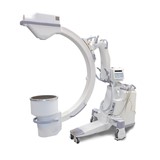
The defining feature of an imaging fitout is that the equipment sets the build, not the other way around. A CT scanner needs reinforced floor loading and specific HVAC. An MRI needs radiofrequency shielding, magnetic-field planning, and quench-pipe routing, and often carries a 12 to 24 week lead time that must anchor the whole program. A general X-ray or CR/DR room needs lead-lined walls sized to the equipment and workload.
This is why the order of decisions matters so much. Operators who design the rooms first and choose equipment later routinely hit costly rework when the machine will not fit the space, the floor cannot carry it, or the services are wrong. Locking the modality mix and equipment vendor first lets the CT room be designed with the right loading and HVAC, the MRI suite planned for shielding, and the reporting room specced correctly from the outset.
What a radiology fitout costs in 2026
Cost scales with the modality mix and the works each machine demands. As a working guide for the Australian market:
- Modest refit or single-modality room: Roughly $50,000 to $250,000. Refreshing an existing space or fitting a single X-ray or ultrasound room with limited structural work.
- Mid-size multi-room centre: Around $250,000 to $800,000. Several modalities, reporting rooms, reception and patient areas, with shielding and services throughout.
- Full multi-modality imaging centre: $800,000 to $2,000,000+. CT and MRI suites with major structural, shielding, and services works, plus full reporting and PACS infrastructure.
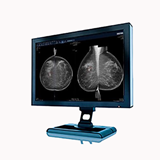
Within that, discrete line items add up fast: reporting workstations with dual or quad calibrated diagnostic monitors meeting RANZCR specifications run around $15,000 to $25,000 each, and PACS infrastructure can run from $80,000 to $200,000 depending on volume and integration. To compare specialist builders and imaging equipment, compare radiology practice fitout quotes from Australian specialists, and scope the machines through the CT scanner and MRI scanner categories.
| Build type | Scope | Indicative cost |
|---|---|---|
| Modest refit / single room | One modality, limited structural work | $50,000 - $250,000 |
| Mid-size multi-room | Several modalities, reporting, patient areas | $250,000 - $800,000 |
| Full multi-modality centre | CT and MRI, major works, full PACS | $800,000 - $2,000,000+ |
The cost drivers that shape the budget
When you scope the project, these are the factors that change the total:
- Modality mix: The single biggest driver. CT and MRI carry major structural, shielding, and services costs that a plain X-ray or ultrasound room does not.
- Shielding and structure: Lead lining for radiation rooms, RF shielding for MRI, and floor reinforcement for heavy scanners are core costs, not extras.
- HVAC and services: Imaging equipment has specific temperature, power, and cooling needs. MRI adds quench routing. Getting services right is essential to commissioning.
- Reporting and PACS: RANZCR-compliant reporting workstations and PACS infrastructure define clinical throughput and are a significant, often underestimated, line item.
- Interoperability: Confirm equipment exchanges data cleanly with referrers, My Health Record, e-referrals, and GP software before signing, or the centre loses efficiency from day one.
Compliance and timeline
Two compliance layers shape an imaging fitout. First, radiation-based modalities require state regulatory licensing and registration before operation, with frameworks varying by jurisdiction, so engage the state regulator early. Second, the Diagnostic Imaging Accreditation Scheme is mandatory for Medicare-billable services, which means the facility and its processes must meet accreditation standards to bill Medicare. As the Australian Commission on Safety and Quality in Health Care sets out, practices must be accredited to the Diagnostic Imaging Standards to provide Medicare-funded services, and unaccredited practices must tell patients no Medicare benefit is payable. On timeline, expect roughly 26 to 40 weeks from design lock to commissioning, longer where structural reinforcement is needed, and sequence the build around the MRI lead time so the program does not stall on variations. For the full planning framework, the radiology and diagnostic imaging fit-out buying guide sets out the equipment-first sequence and accreditation steps in detail.
A realistic scenario
Picture a group opening a new diagnostic imaging centre in outer Melbourne with general X-ray, ultrasound, CT, and a planned MRI suite, aiming to bill Medicare from day one.
By locking the modality mix and equipment vendors first, the CT room is designed with the right floor loading and HVAC, the MRI suite is planned for shielding and quench routing, and the reporting room is specced for RANZCR-compliant workstations. Radiation licensing and accreditation are engaged from the outset, and the build is sequenced around the 12 to 24 week MRI lead time. The result is a centre that commissions on schedule across 26 to 40 weeks rather than stalling on variations, landing in the upper cost band but opening compliant and efficient.
Frequently asked questions
Why plan the equipment before the rooms?
Because the machines set the requirements. Floor loading, shielding, HVAC, and services all depend on the specific equipment, so designing rooms first risks building spaces that cannot house what you buy. Lock the modality mix and vendor first.
What accreditation and licensing do I need?
Radiation-based modalities need state regulatory licensing before operation, and Medicare-billable services require Diagnostic Imaging Accreditation Scheme accreditation. Engage the state regulator and plan for accreditation from the start.
How long does a radiology fitout take?
Expect roughly 26 to 40 weeks from design lock to commissioning, and longer where structural reinforcement is needed. The MRI lead time of 12 to 24 weeks often sets the critical path, so sequence around it.
How much should I budget for reporting and PACS?
Reporting workstations with RANZCR-compliant calibrated monitors run around $15,000 to $25,000 each, and PACS infrastructure from $80,000 to $200,000 depending on volume and integration. These are core costs, not afterthoughts.
What matters most
A radiology fitout succeeds or fails on sequence. Lock the modality mix and equipment vendor first, design the rooms around the machines, budget shielding, services, reporting, and PACS realistically, and engage licensing and accreditation from the outset. Get that right and you open a compliant centre on schedule. Get the order wrong and you pay for it in variations, delays, and rooms that cannot house your equipment.
Ready to compare specialist builders and plan your imaging centre? Get quotes from radiology practice fitout specialists across Australia here.

-160x160-state_article-rel-cat.png)


-160x160-state_article-rel-cat.png)

-160x160-state_article-rel-cat.png)