

Key takeaways
- Annual running costs (AUD 2026): $8,000–$35,000 depending on modality, usage volume and service contract
- X-ray tube replacement: $15,000–$45,000 per tube - the single largest maintenance expense in a 10-year cycle
- DR vs CR service cost: DR systems cost $6,000–$15,000/year to service; CR systems cost $3,000–$8,000 - but DR produces lower per-image costs above 15 images/day
- Flat panel detector replacement: $20,000–$60,000 - budget for one within a 10-year ownership cycle
- PACS software licensing: $2,000–$8,000/year - often missed in initial cost models
- ATO effective life: 10 years - diminishing value rate 20%, prime cost rate 10%
- ARPANSA compliance testing: mandatory, $1,500–$3,500 per machine per year in most states
- 10-year TCO (mid-spec DR): $280,000–$450,000 including purchase, maintenance and consumables
X-ray machine running costs in Australia: What it actually costs to operate (2026)
X-ray machines remain the backbone of diagnostic imaging across Australian medical, dental and veterinary practices - but the gap between what buyers budget for and what they actually spend over a decade is where most cost models fall apart. With DR panel prices dropping and service contract structures shifting in 2026, the running cost picture looks different to even two years ago.
This guide breaks down every recurring cost line for operating an X-ray machine in Australia - servicing, tube replacement, consumables, software, compliance testing and energy - so your approval submission covers the full picture. If you're still evaluating which system type to buy, start with the X-ray machine buying guide first, then return here to model the ongoing costs. Get quotes for X-ray machines to compare and buy from verified Australian suppliers.
Practices and facilities that rely on X-ray imaging daily:
- GP clinics and primary care practices
- Radiology and diagnostic imaging centres
- Orthopaedic and sports medicine clinics
- Hospital emergency departments and inpatient wards
- Chiropractic practices
- Veterinary hospitals and mixed-practice clinics
Confirm your system type - running costs vary by modality
Before modelling any cost, confirm which system type you're operating or planning to buy. Your modality sets the maintenance schedule, consumable load and service contract pricing for the next decade.
System Type | Key Cost Driver | Best For |
|---|---|---|
Digital Radiography (DR) |
Flat panel detector replacement ($20K–$60K) |
High-volume clinics, hospitals, imaging centres |
Computed Radiography (CR) |
Phosphor plate replacement every 2–3 years ($100–$500/plate) |
Lower-volume practices, budget-constrained sites |
Mobile X-Ray |
Battery replacement ($3,000–$6,000 every 3–5 years) |
Emergency, aged care, home visit and rural services |
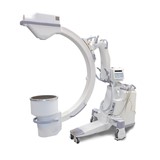
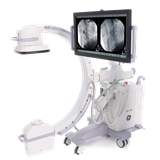
C-Arm (Fluoroscopy) |
Image intensifier replacement ($10,000–$25,000) |
Surgical suites, orthopaedic and pain clinics |
If you're running a DR system at 30+ images per day, your annual service cost will sit at the higher end but your per-image cost drops below CR within the first two years. Factor this into any comparison.
If you're running a CR system in a low-volume practice, plate replacement and reader servicing are your main recurring costs - smaller but steady. Practices weighing portable against fixed systems should also review the portable vs fixed X-ray comparison - the running cost profiles differ significantly between the two.
Understand the key cost specifications
With your system type confirmed, these are the specifications that determine how much you'll spend annually - not just what the machine can do, but what it costs to keep it doing it.
Specification | Typical Range | Cost Implication |
|---|---|---|
X-ray tube heat capacity (kHU) |
150–600 kHU |
Higher capacity = longer tube life under heavy use. Low-capacity tubes in high-volume settings fail sooner. |
Generator output (kW) |
32–80 kW |
Higher output reduces exposure time, lowering tube wear per image. |
Detector type |
CsI (caesium iodide) or Gadox |
CsI panels cost more to replace but deliver better image quality at lower dose - fewer retakes, lower tube wear. |
Daily image volume |
5–100+ images/day |
Directly drives tube degradation rate, consumable usage and service call frequency. |
PACS integration |
Cloud or local server |
Cloud PACS runs $2,000–$8,000/year. On-premise adds server hardware and IT maintenance. |
Warranty period |
1–5 years |
Post-warranty service contracts jump 30–50%. A 5-year warranty defers $15,000–$40,000 in early service costs. |
The full cost breakdown (2026 prices)
Purchase price is only part of the picture - most cost models that get rejected at approval stage have missed the running cost layer. Here's the full breakdown.
Cost Category | Price Range (AUD) | Notes |
|---|---|---|
New DR system (entry-level) |
$100,000–$180,000 |
Single-room, single-detector, basic software |
New DR system (mid-spec) |
$180,000–$350,000 |
Dual detector, auto-positioning, integrated PACS |
New DR system (high-spec) |
$350,000–$500,000+ |
Multi-room, ceiling-suspended, AI-assisted imaging |
Used/refurbished DR system |
$40,000–$120,000 |
Verify remaining tube life and detector condition before purchase |
Annual service contract |
$6,000–$15,000 |
DR systems. CR systems typically $3,000–$8,000. |
X-ray tube replacement |
$15,000–$45,000 |
Expect one replacement in a 10-year cycle at moderate volume |
Flat panel detector replacement |
$20,000–$60,000 |
DR only. Budget for one within 10 years. |
PACS software licensing |
$2,000–$8,000/year |
Cloud-based. On-premise adds $5,000–$15,000 in server hardware. |
ARPANSA compliance testing |
$1,500–$3,500/year |
Mandatory radiation safety testing. Varies by state - NSW EPA, VIC DHHS. |
Power consumption |
$800–$3,000/year |
2–5 kW per operating hour. Higher for ceiling-suspended and multi-room setups. |
Over a 10-year ownership cycle, a mid-spec DR system purchased at $250,000 will typically accumulate $80,000–$150,000 in running costs - one tube replacement, one detector replacement, annual servicing, PACS licensing and compliance testing. That puts your true 10-year TCO at $330,000–$400,000. Missing even one of these line items at approval stage can stall or kill the purchase. Get quotes for X-ray machines to compare and buy from verified Australian suppliers.
Plan the asset - depreciation and financing
The ATO sets the effective life of X-ray machines at 10 years. Under diminishing value, that's a 20% depreciation rate. Under prime cost, it's 10%. The instant asset write-off threshold for the 2025–26 financial year is $20,000 for eligible businesses - most X-ray machines exceed this, so standard depreciation applies. Residual value at 8–10 years is typically 5–15% of the original purchase price for well-maintained DR systems.
For practices where patient volume hasn't been proven - new clinics or expanding into imaging - an operating lease or hire-to-own arrangement locks in a fixed monthly cost ($2,500–$6,000/month for mid-spec DR) while protecting cash flow. Finance approval before purchase is the standard approach - it sets your budget ceiling and keeps the equipment decision focused on clinical fit rather than sticker price.
Evaluate suppliers - running cost checklist
You're ready to go to market. Use this checklist to assess each supplier against the same criteria - with a specific focus on the costs they include and exclude.
Factor | What to Ask |
|---|---|
Warranty duration |
What's included in the base warranty - tube, detector, software? What's excluded? |
Service contract scope |
Does the contract include preventive maintenance, parts, and labour? Or just call-outs? |
Tube replacement cost |
What's the quoted cost for a replacement tube, and is it included in any service tier? |
Detector lifespan guarantee |
What's the expected detector life at your usage volume? Is replacement covered under warranty extension? |
PACS licensing model |
Annual subscription, per-seat, or perpetual licence? What happens if you switch PACS provider? |
Parts availability in Australia |
Are critical parts (tubes, detectors, boards) stocked locally or imported on order? What's the lead time? |
Response time SLA |
What's the guaranteed response time for a breakdown - same day, next day, 48 hours? |
Software update policy |
Are software and firmware updates included in the service contract or billed separately? |
Installation inclusions |
Does the quote include room setup, shielding assessment, calibration and PACS integration? |
Training |
Is operator and administrator training included? On-site or remote? How many sessions? |
Finance options |
Do they offer lease, hire-to-own, or financing partnerships? Can the service contract be bundled? |
Refurbished machine history |
If buying used - what's the tube exposure count, detector age, and remaining warranty? |
Frequently asked questions
How much does it cost to run an x-ray machine per year in Australia?
Annual running costs range from $8,000–$35,000 depending on system type and volume - covering servicing, compliance testing, PACS licensing and power.
How often does an x-ray tube need replacing?
At moderate volume (20–40 images/day), expect one replacement within a 10-year cycle at $15,000–$45,000. High-volume sites may need one within 5–7 years. C-Arm systems have different tube and intensifier replacement cycles - see the C-Arm X-ray price guide for those specifics.
What's the 10-year total cost of ownership for a mid-spec DR system?
A mid-spec DR system purchased at $250,000 typically reaches $330,000–$450,000 over 10 years including servicing, tube and detector replacement, PACS and compliance testing.
Is ARPANSA compliance testing mandatory?
Yes - mandatory across all states at $1,500–$3,500 per machine per year, administered through state regulators such as NSW EPA and VIC DHHS.
Should i buy or lease an x-ray machine for a new practice?
Leasing locks in $2,500–$6,000/month for mid-spec DR and preserves cash flow while volume builds. Get finance pre-approved first to set your budget ceiling.
Summary
- Annual running costs range from $8,000–$35,000 - driven by system type, volume and service contract scope
- X-ray tube replacement ($15,000–$45,000) and detector replacement ($20,000–$60,000) are the two largest single expenses in a 10-year cycle
- PACS licensing, ARPANSA compliance testing and power consumption add $4,300–$14,500 per year on top of servicing
- 10-year TCO for a mid-spec DR system sits at $330,000–$450,000 - budget for the full figure, not just the purchase price
- Get finance pre-approved before selecting equipment to set your budget ceiling
- Compare service contract inclusions across suppliers - what's excluded matters more than the headline price
Ready to source your x-ray machine?
Don't waste time contacting suppliers individually. Get direct access to verified Australian X-ray machine suppliers - where medical buyers request and compare multiple quotes so they can buy with confidence.
- Get quotes for X-ray machines - contact multiple verified suppliers with a single enquiry
- Compare models - filter by modality, configuration and region
- Contact suppliers directly - speak to imaging specialists who service your state
→ Get and compare X-ray machine quotes now →

-160x160-state_article-rel-cat.png)