

Key takeaways
- Total project budget: $1.5M to $5M+ for a 3-modality imaging centre, with equipment capex driving 50% to 65% of the spend.
- Equipment locks the build: room dimensions, floor loading, shielding and HVAC follow the machines selected, not the other way around.
- MRI lead time: typically 12 to 24 weeks for delivery and rigging depending on vendor and configuration, with structural reinforcement and Faraday cage adding $80K to $150K per suite.
- Radiation regulation: radiation-based modalities require state regulatory licensing and registration before operation, with frameworks varying between jurisdictions.
- RANZCR accreditation: the Diagnostic Imaging Accreditation Scheme is mandatory for Medicare-billable services in Australia.
- Build timeline: 26 to 40 weeks from design lock to commissioning, longer if structural reinforcement is required.
Why imaging fit-outs go wrong before construction starts
A radiology centre fit-out goes wrong when the equipment is specified after the tenancy agreement is signed. Floor loading for a CT scanner can reach 1,800 kg point load. An MRI requires structural slab thresholds, a copper Faraday cage and a helium quench vent to roof. If any of these are discovered after the tenancy is committed, the resulting variations regularly exceed $200K and push commissioning back six to ten weeks.
Australian operators planning a new imaging centre in 2026 are buying into a market IBISWorld sizes at $6.3bn, where corporate consolidation is intensifying (the I-MED transaction recently closed at A$3.4bn enterprise value). The procurement decisions made at design stage define the centre's clinical capacity, Medicare billing eligibility and operating margin for the next 10 to 15 years.
Modality selection drives every other decision
The clinical service mix determines the equipment list, and the equipment list determines almost every other build variable. A general community imaging centre typically needs digital X-ray, ultrasound, mammography and bone densitometry. A higher-acuity centre adds CT, MRI and fluoroscopy. Each modality carries distinct constraints: CT needs floor reinforcement and HVAC capacity to dissipate tube heat; MRI needs RF shielding, helium quench routing and exclusion of all ferromagnetic services from the magnet zone. Lock modality mix before signing the tenancy agreement, and get quotes for medical fit-out specialists who have delivered comparable modality combinations.
Space and infrastructure by modality
Use the table below as an early planning baseline. Final specifications come from your equipment vendor's site planning guide.
| Modality | Typical suite area | Key constraint |
|---|---|---|
| 1.5T MRI | 90 to 120 m² | RF shielding, quench vent, magnet exclusion zone |
| 64 to 128 slice CT | 35 to 45 m² | 1,200 to 1,800 kg point load, lead shielding |
| Digital X-ray | 20 to 28 m² | Lead-lined walls and observation window |
| Mammography | 12 to 18 m² | Consultant-calculated lead shielding, privacy layout |
| Ultrasound | 12 to 15 m² per room | No shielding, room count driven by daily volume |
Shielding, structural and plant infrastructure
RF shielding for MRI typically costs $80K to $150K per suite and must be designed by a specialist contractor. Shielding requirements for X-ray, CT, fluoroscopy and mammography rooms are calculated room-by-room by a certified radiation consultant against expected workload modelling and applicable Australian radiation protection standards. Mechanical services scale dramatically with modality count: an MRI suite alone may need 30 to 50 kW of dedicated cooling for the equipment room. Most centres also provision backup power and UPS redundancy for image acquisition, reporting infrastructure and controlled shutdown protection. Get a structural engineer's review of the proposed tenancy slab before signing.
PACS, RIS and reporting workflow
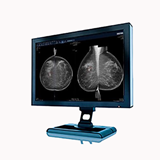
Picture Archiving and Communication Systems and Radiology Information Systems are no longer back-office IT. The reporting workflow defines clinical throughput, and reporting workstations need dual or quad calibrated diagnostic monitors meeting RANZCR specifications. Budget $15K to $25K per reporting workstation, plus $80K to $200K for PACS infrastructure depending on volume and integration scope. Confirm vendor interoperability with referrer systems (My Health Record, e-referrals, GP practice software) before signing the equipment contract.
Vendor selection and installation logistics
The equipment vendor decision determines the build sequence. Major OEMs (GE Healthcare, Siemens Healthineers, Philips, Canon, Fujifilm) each have their own site planning specifications and preferred commissioning contractors. For MRI, the magnet is craned into position and the building is then closed around it; late changes to vendor add weeks of delay. Lock vendor decisions before tendering the construction package, and get quotes for CT scanners and ultrasound machines early to confirm lead times against your construction program.
Australian compliance requirements
Imaging centres offering radiation-based modalities require state regulatory licensing and registration before operation, with the framework, terminology and scope varying between jurisdictions (NSW EPA, Victoria DH, Queensland Health, equivalent regulators in other states). The Diagnostic Imaging Accreditation Scheme, administered through approved accrediting bodies under Commonwealth requirements, is mandatory for Medicare billing. National Construction Code Section J energy provisions apply to the build. Any sterile or interventional procedure room must meet relevant infection control standards. Mammography services additionally require BreastScreen Australia accreditation if servicing the national screening program.
Frequently asked questions
How much does a 3-modality diagnostic imaging centre fit-out cost in Australia in 2026?
Total project cost typically lands between $1.5M and $5M depending on modality mix, with equipment alone contributing $750K to $2.5M. Building works and shielding usually add another $1M to $2M.
What lead time should be allowed for MRI procurement and installation?
MRI lead times from purchase order to commissioning are typically 12 to 24 weeks depending on vendor backlog and configuration, plus 4 to 8 weeks for site preparation and shielding. Site delivery and rigging must be coordinated with the building close-in sequence.
Does floor reinforcement need to be specified before tenancy signing?
Yes, CT scanners impose 1,200 to 1,800 kg point loads and MRI magnets impose distributed loads that older commercial slabs cannot support without reinforcement. Confirm structural capacity before committing to the tenancy.
What accreditation must be in place before billing Medicare?
Diagnostic Imaging Accreditation Scheme accreditation is mandatory for Medicare-rebatable diagnostic imaging services. Allow 6 to 12 weeks for the accreditation cycle and schedule it ahead of go-live.
Who is responsible for radiation shielding design and certification?
A certified radiation shielding consultant calculates requirements room-by-room against expected workload, and a state radiation regulator verifies compliance before licensing. Build the consultant into the design team from concept stage.
What matters most
A radiology centre fit-out is an equipment-led project disguised as a construction project. Lock modality selection and vendor before the tenancy agreement, schedule shielding and structural design ahead of architectural design, and build accreditation timing into the project plan. The centres that open on schedule are the ones where procurement led the design brief, not the other way around.
Compare radiology fit-out specialists in Australia
Get and compare medical fit-out quotes now from verified Australian suppliers servicing radiology and diagnostic imaging operators. Request quotes from radiology fit-out specialists now.