
Intraoral X-Ray Unit

Join medical buyers comparing supplier quotes and buying with confidence. Free, quick and easy.


How MedicalSearch works
Tell us what you need
Answer a few quick questions about the equipment you're looking for.
Get personalised quotes
Receive tailored quotes from relevant Australian suppliers.
Compare and choose
Compare quotes, ask questions and choose the best option for you.
 Save time
 Compare quotes
 Buy with confidence
Save time, compare quotes & buy with confidence
Intraoral X-Ray Unit Suppliers
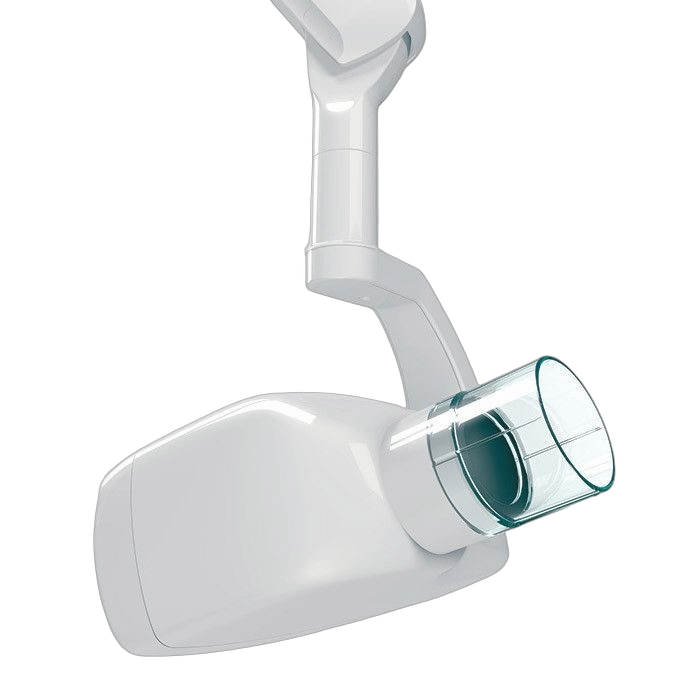
An intraoral x-ray unit is a type of x-ray that’s designed to capture film from within the patient’s mouth. They are the most common types of dental x-rays and offer extremely detailed images to the dentist.
Dentists use intraoral x-ray units to better analyze the health of a patient’s tooth roots, check for cavities, and evaluate the bone density around the teeth.
These are handheld x-ray units that the dentist carefully inserts into the patient’s mouth. With an x-ray sensor, the unit takes images from inside a patient’s mouth and reproduces them on film.
The dentist may require a patient to bite on a piece of plastic holding the x-ray film, which leads to a better and clearer image.
These handheld x-ray units are an essential part of diagnostic medicine and allow dentists to carefully review a patient’s oral health and offer recommendations and treatment solutions.
We at Ivoclar recognise you as a dental professional and as an individual. We support you in your work as a dentist, dental technician or dental hygienist so that you can fulfil your passion and purpose: to ensure that people have the best possible quality of life, today and in the future. You are our inspiration. Together we strive for excellence. Like our customers, Ivoclar ...
Customers: NSW Health, DHSV, Qld Health, Aesthetik Dental, Horizon Pro Dental, Northshore Dental Care

Carestream Health, Inc., is a worldwide provider of dental and medical imaging systems and healthcare IT solutions as well as molecular imaging systems for the life science research and drug discovery/development market segments, and x-ray film and digital x-ray products for the non-destructive testing market.


- Wall-mounted units: These are fixed to the wall and are commonly used in dental clinics. They are available in different sizes and configurations.
- Portable units: These are compact and lightweight, making them easy to move around. They are ideal for use in mobile dental clinics or for taking X-rays in remote locations.
- Handheld units: These are small, handheld devices that are used to take X-rays. They are typically used for taking X-rays of individual teeth or small areas of the mouth.
- Cone beam computed tomography (CBCT) units: These are advanced X-ray machines that use a cone-shaped beam to capture detailed 3D images of the teeth and jaws. They are commonly used for orthodontic and implant planning.
- Digital X-ray units: These use digital sensors to capture X-ray images, which can be viewed on a computer screen. They offer several advantages over traditional film X-rays, including faster processing times and lower radiation exposure.
- Image quality: Look for a unit that produces high-quality images with good resolution and contrast.
- Radiation dose: Choose a unit that delivers the lowest possible radiation dose to patients while still producing clear images.
- Size and weight: Consider the size and weight of the unit, as well as its portability, especially if you plan to use it in multiple locations.
- Ease of use: Look for a unit that is easy to operate and has intuitive controls.
- Compatibility: Ensure that the unit is compatible with your existing X-ray equipment and software.
- Cost: Consider the cost of the unit, including any ongoing maintenance and repair expenses.
- Only licensed operators can use the equipment.
- The equipment must be regularly maintained and calibrated to ensure accurate and safe operation.
- The operator must wear protective clothing, such as lead aprons and gloves, to minimize exposure to radiation.
- The patient must also wear protective clothing, such as a lead apron, to minimize exposure to radiation.
- The X-ray unit must be positioned correctly to minimize radiation exposure to the patient and operator.
- The X-ray unit must be operated at the lowest possible radiation dose to achieve the desired diagnostic result.
- The X-ray unit must be properly shielded to prevent radiation leakage.
- The X-ray unit must be used in a well-ventilated area to prevent the accumulation of radiation.
- The operator must follow all safety procedures and guidelines provided by the manufacturer and ARPANSA.
- Daily cleaning: The unit should be cleaned daily with a soft cloth or brush to remove any debris or dust.
- Weekly cleaning: The unit should be disinfected weekly using a disinfectant solution recommended by the manufacturer.
- Monthly maintenance: The unit should be inspected monthly for any signs of wear and tear, loose connections, or damage to the cables or wires.
- Calibration: The unit should be calibrated annually to ensure accurate and consistent X-ray output.
- Repairs: Any repairs or replacements should be done by a qualified technician to ensure the safety and effectiveness of the unit.
- Radiation safety: The unit should be regularly checked for radiation leakage and comply with all safety regulations and guidelines.
Intraoral X-Ray Unit Costs and Supplier Insights
If you are looking to buy an Intraoral X-Ray Unit for sale, suppliers on MedicalSearch include IVOCLAR VIVADENT
Buy a Intraoral X-Ray Unit Near Me
Intraoral X-Ray Unit Articles & Reviews
-
![]() Buying guide
Intraoral X-Ray vs OPG: When You Need Both and When One Is Enough (2026 Comparison) in Intraoral-x-ray-unit
Read guide
-
![]() Buying guide
Intraoral X-Ray Unit Prices in Australia: What Your Dental Practice Should Expect To Pay in 2026 in Intraoral-x-ray-unit
Read guide
-
![]() Buying guide
The Dental Practice Owner's Checklist for Buying an Intraoral X-Ray Unit (2026) in Intraoral-x-ray-unit
Read guide



 Reach valuable medical buyers in minutes
 Promote key products & content
 Drive cost effective & measurable sales