
Audiometer

Join medical buyers comparing supplier quotes and buying with confidence. Free, quick and easy.


How MedicalSearch works
Tell us what you need
Answer a few quick questions about the equipment you're looking for.
Get personalised quotes
Receive tailored quotes from relevant Australian suppliers.
Compare and choose
Compare quotes, ask questions and choose the best option for you.
 Save time
 Compare quotes
 Buy with confidence
Save time, compare quotes & buy with confidence
Audiometer - Screening & Diagnostic Suppliers
Hearing loss can affect us at any age. And that’s why the field of audiometry has become such an essential part of the medical framework that keeps us all ticking along as well as we can. A quick hearing test during regular medical checkups can spot an issue before it causes any irreparable damage.
Of course, hearing loss becomes more prevalent as we get older – a quarter of people over 50 have some form of hearing impairment – and early detection of any problem is the key.
During an audiometer test, a patient wears headphones while the doctor plays a series of sounds of varying pitches and volumes and records the results to determine if there are hearing problems.
Audiometers are instrumental in facilitating early detection. Audiometers test hearing function by measuring both the intensity and tone of sounds a patient hears. They also test for balance problems caused by inner ear ailments.

Natus Medical Incorporated (Natus) offers medical equipment, software, supplies and services for the diagnosis, monitoring, and Our comprehensive product portfolio represents a heritage of innovation and leadership. Natus brands have been setting the standard for patient care for over eighty (80) years. Our products are trusted by medical professionals in university medical ...
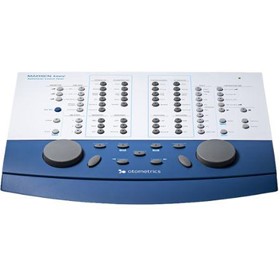

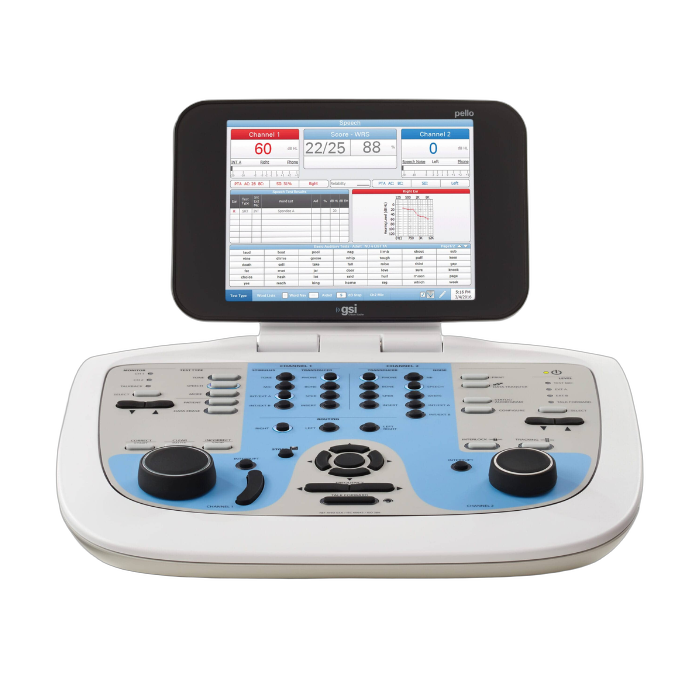
- Diagnostic audiometers: These are used by audiologists to diagnose hearing loss and determine the type and severity of the condition.
- Screening audiometers: These are used to quickly test a large number of people for hearing loss, such as in schools or workplaces.
- Clinical audiometers: These are used in clinical settings to evaluate and monitor hearing loss in patients.
- Portable audiometers: These are small and lightweight, making them ideal for use in remote locations or for home visits.
- Computerized audiometers: These use software programs to administer and analyze hearing tests, providing more accurate and detailed results.
- Pediatric audiometers: These are designed specifically for testing the hearing of children, with features such as colorful graphics and interactive games to keep them engaged.
- Frequency range: The audiometer should have a wide frequency range to accurately test different levels of hearing loss.
- Intensity range: The audiometer should have a wide intensity range to accurately test different levels of hearing loss.
- Testing modes: The audiometer should have different testing modes such as air conduction, bone conduction, and speech testing.
- Calibration: The audiometer should be calibrated regularly to ensure accurate results.
- Portability: If the audiometer needs to be moved frequently, it should be lightweight and portable.
- User-friendly interface: The audiometer should have a user-friendly interface that is easy to navigate.
- Data storage: The audiometer should have the ability to store test results for future reference.
- Connectivity: The audiometer should have the ability to connect to a computer or other devices for data transfer and analysis.
- The calibration and maintenance requirements for audiometers may vary depending on the manufacturer's recommendations and the type of audiometer. However, some general guidelines include:
- Calibration:
- - Audiometers should be calibrated annually or as recommended by the manufacturer.
- - Calibration should be performed by a qualified technician using a calibrated sound level meter.
- - The audiometer should be tested at various frequencies and sound levels to ensure accuracy.
- Maintenance:
- - The device should be cleaned regularly to prevent dust and debris from affecting the accuracy of the results.
- - The headphones and ear tips should be replaced regularly to ensure proper fit and function.
- - The device should be inspected for any damage or wear and tear that may affect its performance.
- Type of audiometer: There are three types of audiometers - diagnostic, screening, and clinical. Diagnostic audiometers are used for comprehensive hearing assessments, screening audiometers are used for quick hearing screenings, and clinical audiometers are a combination of both.
- Frequency range: The frequency range of an audiometer determines the range of sounds that can be tested. It is important to choose an audiometer with a frequency range that covers the hearing range of your patients.
- Sound level range: The sound level range of an audiometer determines the loudness of the sounds that can be tested. It is important to choose an audiometer with a sound level range that covers the hearing sensitivity of your patients.
- Testing options: Some audiometers offer additional testing options such as speech testing, bone conduction testing, and masking. Consider the testing options that are important for your practice or clinic.
- Portability: If you need to move the audiometer between different locations, consider a portable audiometer that is easy to transport.
- Cost: Audiometers can range in price from a few hundred dollars to several thousand dollars. Consider your budget and the features that are most important for your practice or clinic.
- Calibrate the audiometer regularly according to the manufacturer's instructions.
- Use appropriate headphones or insert earphones that fit snugly in the ear canal.
- Ensure that the testing environment is quiet and free from any background noise.
- Instruct the patient to sit still and remain quiet during the test.
- Conduct a pure-tone threshold test to determine the patient's hearing thresholds at different frequencies.
- Repeat the test at least twice to ensure consistency and accuracy of results.
- Document the results accurately and clearly in the patient's medical record.
- Interpret the results in the context of the patient's medical history and other relevant factors.
Audiometer Costs and Supplier Insights
Buy a Audiometer Near Me

 Reach valuable medical buyers in minutes
 Promote key products & content
 Drive cost effective & measurable sales