
Analytical Balance in Adelaide

Join medical buyers comparing supplier quotes and buying with confidence. Free, quick and easy.


How MedicalSearch works
Tell us what you need
Answer a few quick questions about the equipment you're looking for.
Get personalised quotes
Receive tailored quotes from relevant Australian suppliers.
Compare and choose
Compare quotes, ask questions and choose the best option for you.
 Save time
 Compare quotes
 Buy with confidence
Save time, compare quotes & buy with confidence
Analytical Balance Suppliers in Adelaide

GaP Solutions is an Analytical Balance supplier to Adelaide
GaP Solutions is a weighing equipment supplier. Since its creation, GaP has used its unique expertise in these key areas to become recognized as the foremost innovator of various industries.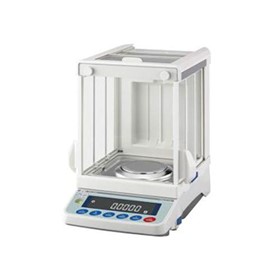

Advance POS & Scale Solutions is an Analytical Balance supplier to All
Advance POS is an Australian IT company dedicated to helping businesses succeed by offering effective Point of Sales (POS) solutions across Australia. In addition to POS, we also sell a range of digital scales and balances for a whole range of industries and application.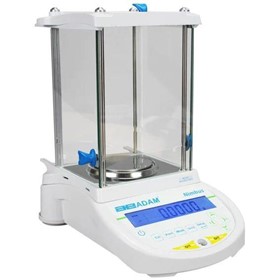

Pathtech is an Analytical Balance supplier to All
At Pathtech we supply, support and service a global range of high quality science products and equipment and drug and alcohol detection devices. For over 39 years we have operated as an innovative, ethical and successful distributor within the Australian Scientific, Forensic and Business communities. We are partners with leading manufacturers around the world and our range ...


- Top-loading analytical balances: These are the most common type of analytical balances and are used for general laboratory weighing applications.
- Microbalances: These are highly sensitive analytical balances that can weigh substances with a precision of up to 0.0001 milligrams.
- Moisture analyzers: These analytical balances are used to determine the moisture content of a sample.
- Density meters: These analytical balances are used to determine the density of a sample.
- Portable analytical balances: These are lightweight and compact analytical balances that can be easily transported to different locations.
- Semi-microbalances: These analytical balances are used for weighing small samples with a precision of up to 0.01 milligrams.
- Sensitivity: The sensitivity of an analytical balance is another important feature to consider. The balance should be able to detect small changes in weight, typically in the range of 0.1 mg to 1 mg.
- Capacity: The capacity of an analytical balance is the maximum weight it can measure. Analytical balances typically have a capacity of 100 g or less.
- Repeatability: Repeatability refers to the ability of the balance to give the same measurement when the same weight is measured multiple times. A good analytical balance should have a high level of repeatability.
- Calibration: Analytical balances need to be calibrated regularly to ensure accurate measurements. Look for a balance that is easy to calibrate and has a built-in calibration feature.
- Stability: The balance should be stable and not be affected by external factors such as vibrations, temperature changes, or air currents.
- User interface: The user interface should be easy to use and navigate. Look for a balance with a clear display and intuitive controls.
- Durability: Analytical balances are a significant investment, so it's important to choose one that is durable and built to last. Look for a balance made from high-quality materials and with a solid construction.
- Calibration: An analytical balance should be calibrated regularly to ensure accurate measurements. Calibration should be done using certified weights.
- Cleaning: The balance should be cleaned regularly to remove dust and other contaminants that may affect its accuracy. Use a soft brush or a lint-free cloth to clean the balance.
- Leveling: The balance should be leveled to ensure that it is stable and accurate. Use the built-in leveling feet or a spirit level to level the balance.
- Temperature control: The balance should be kept in a temperature-controlled environment to prevent temperature fluctuations that may affect its accuracy.
- Handling: The balance should be handled with care to prevent damage to the weighing pan or other components. Avoid placing heavy objects on the weighing pan or dropping the balance.
- The calibration process typically involves the following steps:
- Clean the balance and ensure it is level.
- Tare the balance with a clean and dry container.
- Weigh a known mass, such as a calibration weight, and record the reading.
- Repeat the process with different masses to ensure accuracy across the balance's range.
- Adjust the balance if necessary to ensure accurate readings.
- The verification process typically involves the following steps:
- Check the balance's performance against established standards, such as those set by the National Institute of Standards and Technology (NIST).
- Verify the balance's repeatability by weighing the same object multiple times and ensuring consistent readings.
- Verify the balance's linearity by weighing objects of different masses and ensuring the readings are proportional to the mass.
- Verify the balance's sensitivity by weighing objects with small differences in mass and ensuring the readings are accurate.
- In addition to the warranty, manufacturers may also offer technical support and repair services for their analytical balances. This may include phone or email support, on-site repair services, or the option to send the balance in for repairs.
- Some manufacturers may also offer calibration services for their analytical balances. Calibration is important to ensure accurate and precise measurements, and may be required for certain industries or applications.
- Use clean and dry weighing vessels.
- Avoid touching the weighing pan with bare hands.
- Avoid placing heavy objects on the balance.
- Do not move the balance while it is in use.
- Use a draft shield to protect the balance from air currents.
- Calibrate the balance regularly to ensure accurate readings.
- Do not overload the balance beyond its capacity.
- Avoid exposing the balance to extreme temperatures or humidity.
Analytical Balance Costs and Supplier Insights
If you are looking to buy an Analytical Balance for sale, suppliers on MedicalSearch include Bioline Global, Pacific Laboratory Products, Thermo Fisher Scientific Australia Pty Ltd, NWI Group, Labec
Why choose a supplier in Adelaide for Analytical Balance Quotes?
If you are in Adelaide and considering purchasing an Analytical Balance, it's worth considering Adelaide-based suppliers. Doing so offers several benefits that are particularly relevant to businesses in the area. Here are the top reasons why opting for a local Adelaide supplier can be the best decision for your Analytical Balance buying needs.
After-Sales Support for Analytical Balance in AdelaideAccess dependable after-sales support for your Analytical Balance with Adelaide suppliers. Local service means faster response times and more personal care.
Compliance with Regulations by Buying LocallyEnsure full compliance with Adelaide regulations when you buy an Analytical Balance locally. Local suppliers are familiar with local standards, helping you avoid costly issues.
On-Site Analytical Balance Support and TrainingBenefit from on-site support and training in Adelaide. Having access to immediate help and expertise ensures your team uses the equipment effectively.
Dependability of Adelaide Analytical Balance ProductsAssure quality and dependability when you buy an Analytical Balance. Local suppliers maintain rigorous quality control to meet your expectations.
Stay Ahead in Analytical Balance TechnologyStay ahead in Analytical Balance technology with the help of local suppliers. They bring the newest advancements directly to your doorstep, keeping you competitive.
Advance Your Sustainability GoalsAdvance your sustainability goals by partnering with Analytical Balance suppliers. Local production lessens environmental impact and promotes greener operations.
Buy a Analytical Balance Near Me

 Reach valuable medical buyers in minutes
 Promote key products & content
 Drive cost effective & measurable sales