
Dental Suction Unit in Darwin

Join medical buyers comparing supplier quotes and buying with confidence. Free, quick and easy.


How MedicalSearch works
Tell us what you need
Answer a few quick questions about the equipment you're looking for.
Get personalised quotes
Receive tailored quotes from relevant Australian suppliers.
Compare and choose
Compare quotes, ask questions and choose the best option for you.
 Save time
 Compare quotes
 Buy with confidence
Save time, compare quotes & buy with confidence
Dental Suction Unit Suppliers in Darwin
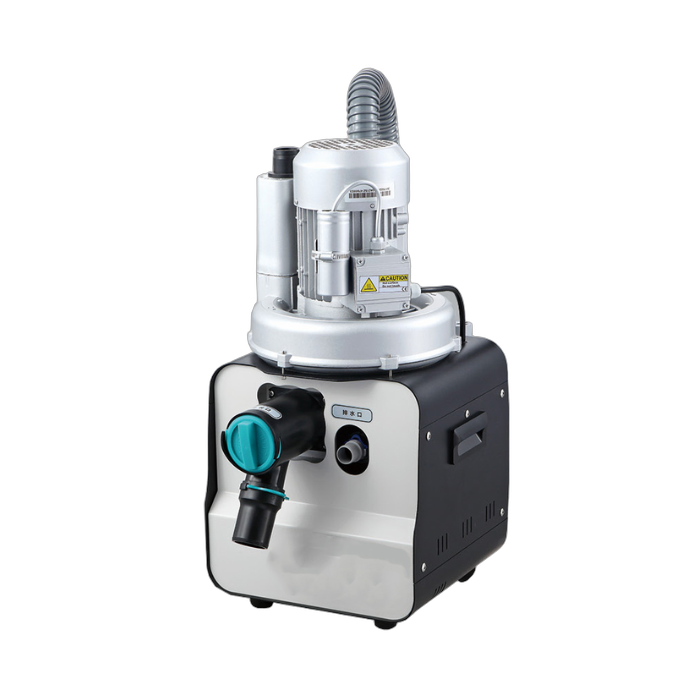
Dental suction units work by producing a suction pressure that enables the machine to remove the fluid from a patient's mount. The suction pipe moves air and fluid from the patient's mouth and into the pump where air, liquid, and solid or semi-solid are separated. A reverse flow valve eliminates any chance of reverse flow of fluid or solid thus preventing contamination. Air, liquid, and solid move out of the machine through separate outlets. They are known for their reliability, quality of operation, and high energy efficiency in terms of electricity.
There are multiple technologies developed for these units. Radial technology and inverter technology are the two most commonly used and are height energy efficient. Their intelligent system allows more than one suction unit to be operated with a single suction line.
Functions like load depending automatic suction adjustment system allow a constant suction pressure all the time, an easy plug-and-play electronic system and easy integration of the suction unit with digital monitoring and controlling unit. Manufactured using a special noise absorbing foamed plastic material and specifically designed to produce almost no vibrations these suction machines produce very low noise and vibration.

Minimax Implant (Dentium Australia) is an Dental Suction Unit supplier to All
We offer selected dental equipment for various purposes, dental materials, instruments and disposable dental products. Minimax is committed to provide a variety of quality dental products and the best service & support upon the needs of our clients in order to achieve the highest level of solution. We are proud to say that Minimax offers an unparalleled service system like no ...

- Centralised suction units: These are large, powerful suction units that are installed in a central location in the dental practice. They are connected to a network of suction pipes that run throughout the practice, allowing for multiple dental chairs to be serviced at the same time.
- Portable suction units: These are smaller suction units that can be easily moved from one location to another. They are often used in emergency situations or in smaller dental practices where space is limited.
- High-volume evacuation (HVE) units: These are specialized suction units that are designed to remove large volumes of fluid from the patient's mouth. They are typically used during procedures such as extractions or implant placements.
- Saliva ejectors: These are small, disposable suction devices that are used to remove saliva from the patient's mouth during routine dental cleanings or other minor procedures.
- Type of suction unit: There are two types of suction units - wet and dry. Wet suction units use water to create suction, while dry suction units use air. Wet suction units are better for heavy-duty procedures that require a lot of water, such as oral surgery. Dry suction units are suitable for routine dental procedures.
- Capacity: The capacity of the suction unit is another crucial factor to consider. The capacity should be sufficient to handle the volume of liquid and debris generated during dental procedures.
- Noise level: Dental procedures can be noisy, and adding a noisy suction unit can make it worse. Choose a suction unit that produces minimal noise to create a comfortable environment for your patients.
- Portability: If you plan to move your suction unit frequently, choose a portable unit that is easy to move around.
- Maintenance: Choose a suction unit that is easy to clean and maintain. The suction unit should be durable and require minimal upkeep.
- The suction power of a dental suction unit can vary depending on the specific model and manufacturer. However, most dental suction units have a suction power that ranges from 50 to 300 LPM. The ideal suction power for a dental suction unit depends on the specific needs of the dental practice and the type of procedures being performed.
- Clean the unit daily: After each use, the suction unit should be cleaned to remove any debris and to prevent the buildup of bacteria. Use a disinfectant solution and wipe down the exterior of the unit.
- Replace the filters: The suction unit has filters that need to be replaced regularly. The frequency of replacement depends on the usage and the manufacturer's instructions. Typically, filters should be replaced every 3 to 6 months.
- Check the hoses and connections: The hoses and connections should be checked periodically to ensure that they are secure and not leaking. Any damage should be repaired immediately.
- Service the unit annually: The suction unit should be serviced annually by a qualified technician. This includes a thorough cleaning, replacement of any worn-out parts, and testing the suction power.
Dental Suction Unit Costs and Supplier Insights
Buy a Dental Suction Unit Near Me

 Reach valuable medical buyers in minutes
 Promote key products & content
 Drive cost effective & measurable sales