
Patient Hoist

Join medical buyers comparing supplier quotes and buying with confidence. Free, quick and easy.



How MedicalSearch works
Tell us what you need
Answer a few quick questions about the equipment you're looking for.
Get personalised quotes
Receive tailored quotes from relevant Australian suppliers.
Compare and choose
Compare quotes, ask questions and choose the best option for you.
 Save time
 Compare quotes
 Buy with confidence
Save time, compare quotes & buy with confidence
Patient Hoist & Patient Lifting Hoist Suppliers
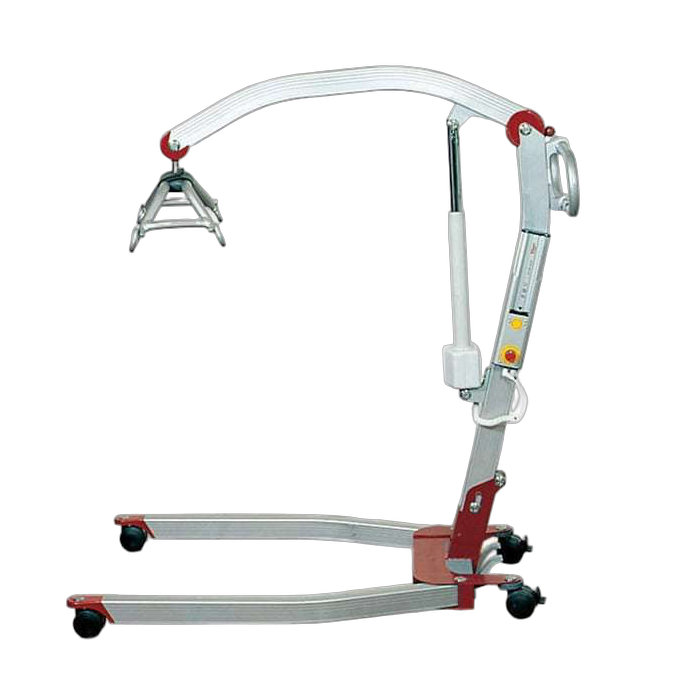
A patient lifter and hoist, also known as a Hoyer lift, is used by caregivers to hoist patients with limited mobility and transport them from one place to another. Patient lifts and hoists are used for lifting morbidly obese patients or those with restricted mobility, often from a bed to a wheelchair, or to a toilet or a shower.
Patient lifters and hoists are assistive devices, often featuring a sling lift. They are powered either by hydraulic power or electricity. The sling is placed under the patient, which is then lifted upwards by a motor. Some are plugged in directly to the power source, while others are operated manually with a hydraulic pedal.
The main components of a patient lifter and hoist include the boom, which is the bar that extends over the patient, and the mast, which is the vertical bar that is firmly installed within the bar. Latches and clips are used to attach the spreader bar, which lifts the patient upwards.
Welcome to Avant Innovations – Australia’s leader in bringing worldwide assistive technology to members of our community living with differing abilities. Our mission is to provide inclusive innovation or innovative inclusion – however you want to look at it… It’s been quite a journey – since our management team joined the industry in 1995! We’ve evolved from a specialist ...
Customers: NSW Health, QLD Health, SA Health, NDIS

Patient Hoist Buying Guide
Find and buy patient lifters and hoists from verified suppliers on MedicalSearch. Patient lifters and hoists are used to transfer patients comfortably without manual lifting.
Factors to consider when buying a patient lifter and hoist:
- Patient weight - The patient’s weight must be within the maximum weight capacity of the lift.
- Manual or electric - Manual lifts are good for home settings while the electric versions are more suitable for hospitals and other medical facilities. Make sure that the electric lift has an emergency control or manual override feature.
- Height and adjustment - Patients’ needs will determine the best height range of the lift.
- Portability - Some lifts can be folded for storage or transport.
- Slings and cradles - The compatibility of the sling and cradle will affect the stability of the patients and the ease of moving them in different positions. There are different types of sling:.
- Full- body sling - For very heavy patients who are partially or totally dependent.
- U-sling - Easy to fit for different purposes and types of patients.
- Toileting sling - Has a hole in the bottom that allows patients to access a toilet.
- Specialty lifts - For use beyond the basic:
- Heavy-duty - with adjustable legs for stability and weight capacity up to 1,000 pounds.
- Bath lift - Made from germ-resistant plastic and rust-free aluminium used to lower and raise patients into a bathtub<.
Contact our vendors for a free quote or expert advice on patient lifters and hoists. Delivery available Australia wide.

- Ceiling hoists: These are fixed to the ceiling and can be operated with a remote control. They are suitable for patients who require frequent transfers.
- Mobile hoists: These are portable and can be moved from room to room. They are suitable for patients who require occasional transfers.
- Stand-up hoists: These are designed to help patients who are able to stand but require assistance to transfer from one place to another.
- Bath hoists: These are designed to help patients with limited mobility to get in and out of the bath.
- Pool hoists: These are designed to help patients with limited mobility to get in and out of a swimming pool.
- Stairlifts: These are designed to help patients with limited mobility to navigate stairs safely.
- Weight capacity: Ensure that the hoist can support the weight of the patient.
- Stability: Look for a hoist with a wide base and sturdy construction to prevent tipping.
- Brakes: Check that the hoist has brakes to prevent it from rolling or moving unexpectedly.
- Sling compatibility: Ensure that the hoist is compatible with the sling you plan to use.
- Emergency stop button: Look for a hoist with an emergency stop button that can quickly stop the hoist in case of an emergency.
- Overload protection: Some hoists have overload protection that prevents the hoist from lifting too much weight.
- Battery backup: A battery backup can ensure that the hoist can still be used in case of a power outage.
- Height adjustment: Look for a hoist with height adjustment to ensure that the patient can be lifted safely and comfortably.
- User-friendly controls: Check that the hoist has easy-to-use controls that are simple to understand and operate.
- Regularly inspect the hoist for any signs of wear and tear, such as frayed cables or loose bolts.
- Clean the hoist after each use with a mild detergent and warm water. Avoid using harsh chemicals or abrasive materials that could damage the hoist.
- Lubricate the moving parts of the hoist with a silicone-based lubricant to ensure smooth operation.
- Check the battery regularly and recharge it as needed. Replace the battery if it no longer holds a charge.
- Store the hoist in a dry, clean place when not in use.
- Have the hoist serviced by a qualified technician at least once a year to ensure it is in good working order.
Patient Hoist Costs and Supplier Insights
If you are looking to buy a Patient Hoist for sale, suppliers on MedicalSearch include Avant Innovations
Buy a Patient Hoist Near Me
Patient Hoist Articles & Reviews
-
![]() Buying guide
Patient hoist price guide Australia 2026: what you will pay and why in Patient-hoist
Read guide
-
![]() Buying guide
Standing Hoist Lifters in Aged Care: How to Choose the Right Equipment in Patient-hoist
Read guide
-
![]() Buying guide
Standing Hoists for Bariatric Patients in Patient-hoist
Read guide
-
![]() Buying guide
Patient Hoist Maintenance and Safety Practices: Ensuring Optimal Performance and User Safety in Patient-hoist
Read guide
-
![]() Buying guide
Innovations and Future Trends in Patient Hoists: Advancing Safe Patient Mobility in Patient-hoist
Read guide
-
![]() Buying guide
Troubleshooting and Common Issues with Patient Hoists: Tips for Prompt Resolution in Patient-hoist
Read guide



 Reach valuable medical buyers in minutes
 Promote key products & content
 Drive cost effective & measurable sales