
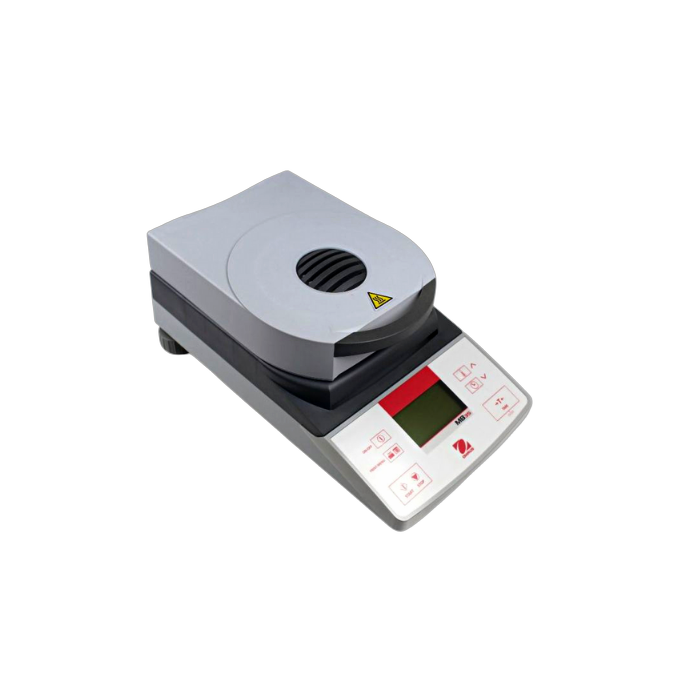
Moisture Analyser in Hobart

Join medical buyers comparing supplier quotes and buying with confidence. Free, quick and easy.


How MedicalSearch works
Tell us what you need
Answer a few quick questions about the equipment you're looking for.
Get personalised quotes
Receive tailored quotes from relevant Australian suppliers.
Compare and choose
Compare quotes, ask questions and choose the best option for you.
 Save time
 Compare quotes
 Buy with confidence
Save time, compare quotes & buy with confidence
Moisture Analyser Suppliers in Hobart
Pacific Laboratory Products is an Moisture Analyser supplier to All
Laboratory supplies, Glassware, Plasticware, Instruments and Equipment in Australia. Pacific Laboratory Products is a wholly owned Australian company supplier a broad range of laboratory equipment, laboratory consumables and laboratory supplies to laboratories throughout Australia. Established in 2005, the company has grown to support a head office in Melbourne, with sales and ...
NWI Group is an Moisture Analyser supplier to All
Since its inception in 1994, NWI Group has been committed to providing a service of quality in the sale, repair and calibration of measuring and weighing equipment used in laboratories and manufacturing companies. Our strive for continuous improvement is part of our quality policy statement.


Imbros is an Moisture Analyser supplier to Hobart
With over 45 years of experience supplying scientific instruments to businesses across Oceania, Imbros is your go-to consult for equipment, servicing and advice - whatever your needs. Started in 1973, Imbros has grown into one of Australia’s largest and most trusted suppliers of Marine and Laboratory Science Instruments and Equipment. Based in Cambridge, Tasmania, Imbros can ...

- What is a Moisture Analyser and how does it work?
- What are the different types of Moisture Analysers available in the market?
- What are the key features to look for when buying a Moisture Analyser?
- What is the accuracy and precision of a Moisture Analyser?
- How much does a Moisture Analyser cost?
- What is the warranty and after-sales support offered by the manufacturer?
- Can a Moisture Analyser be calibrated and how often?
- What are the sample size and testing time requirements for a Moisture Analyser?
- What are the safety precautions to follow while using a Moisture Analyser?
- Halogen Moisture Analyser: This type of analyser uses a halogen bulb to heat the sample and measure the moisture content.
- Infrared Moisture Analyser: Infrared moisture analysers use infrared radiation to measure the moisture content of a sample.
- Microwave Moisture Analyser: Microwave moisture analysers use microwave radiation to measure the moisture content of a sample.
- Karl Fischer Moisture Analyser: Karl Fischer moisture analysers use a chemical reaction to measure the moisture content of a sample.
- Loss on Drying Moisture Analyser: Loss on drying moisture analysers measure the weight loss of a sample as it is heated to determine the moisture content.
- Capacitance Moisture Analyser: Capacitance moisture analysers measure the change in capacitance of a sample as it loses moisture to determine the moisture content.
- Near-Infrared Moisture Analyser: Near-infrared moisture analysers use near-infrared radiation to measure the moisture content of a sample.
- Food industry: Moisture analysers are used to determine the moisture content of food products such as grains, fruits, vegetables, and meat. This helps in ensuring the quality and safety of the food products.
- Pharmaceutical industry: Moisture analysers are used to measure the moisture content of drugs and other pharmaceutical products. This helps in ensuring the stability and efficacy of the products.
- Chemical industry: Moisture analysers are used to measure the moisture content of chemicals and other industrial materials. This helps in ensuring the quality and consistency of the products.
- Environmental monitoring: Moisture analysers are used to measure the moisture content of soil, air, and other environmental samples. This helps in understanding the impact of moisture on the environment.
- Construction industry: Moisture analysers are used to measure the moisture content of building materials such as concrete, wood, and insulation. This helps in ensuring the durability and safety of the structures.
- Preparing the calibration standards: Calibration standards are prepared by drying a sample of known moisture content to a constant weight. These standards are used to calibrate the moisture analyzer.
- Setting up the moisture analyzer: The moisture analyzer is set up according to the manufacturer's instructions. This involves turning on the instrument, selecting the appropriate settings, and allowing it to warm up.
- Zeroing the balance: The balance is zeroed to ensure accurate measurements. This is done by pressing the tare button or using the zero function on the instrument.
- Calibrating the instrument: The calibration standards are placed in the moisture analyzer and the instrument is calibrated. This involves entering the known moisture content of the standard into the instrument and allowing it to measure the moisture content.
- Verifying the calibration: After calibration, the instrument is verified by measuring the moisture content of a sample of known moisture content. The measured moisture content should be within the acceptable range for the sample.
- Overload protection: Moisture analyzers have overload protection to prevent damage to the instrument in case of excessive sample weight.
- Automatic shut-off: Moisture analyzers have an automatic shut-off feature that turns off the instrument when the sample is dry or when the maximum drying time is reached.
- Temperature control: Moisture analyzers have temperature control to prevent overheating of the sample and the instrument.
- Safety interlocks: Moisture analyzers have safety interlocks that prevent the instrument from operating when the lid is open or the sample pan is removed.
- Ventilation: Moisture analyzers have ventilation systems that prevent the buildup of moisture and fumes inside the instrument.
- Grounding: Moisture analyzers are grounded to prevent electrical shocks.
- Display: Moisture analyzers have a clear and easy-to-read display that shows the status of the instrument and the drying process.
Moisture Analyser Costs and Supplier Insights
If you are looking to buy a Moisture Analyser for sale, suppliers on MedicalSearch include Pacific Laboratory Products, NWI Group
Why choose a supplier in Hobart for Moisture Analyser Quotes?
If you are in Hobart and considering purchasing a Moisture Analyser, it's worth considering Hobart-based suppliers. Doing so offers several benefits that are particularly relevant to businesses in the area. Here are the top reasons why opting for a local Hobart supplier can be the best decision for your Moisture Analyser buying needs.
Eco-Friendly Moisture Analyser SolutionsReduce your carbon footprint by choosing eco-friendly Moisture Analyser solutions. Local sourcing cuts down on transport emissions and supports sustainable practices.
Create Local PartnershipsCreate valuable local partnerships with Moisture Analyser suppliers in Hobart. These collaborations can lead to shared growth and success.
Access the Local Moisture Analyser InnovationsAccess the latest Moisture Analyser innovations quickly by partnering with suppliers. Access the latest technologies faster with your local supplier.
Economical Purchasing in HobartMake economical decisions by purchasing your Moisture Analyser from Hobart. Save on transport and import duties, reducing overall procurement costs.
Streamlined Supply Chain with Hobart SuppliersStreamline your supply chain by choosing Moisture Analyser suppliers in Hobart. Local sourcing simplifies logistics and speeds up your operations.
Compliance with Regulations by Buying LocallyEnsure full compliance with Hobart regulations when you buy a Moisture Analyser locally. Local suppliers are familiar with local standards, helping you avoid costly issues.
Buy a Moisture Analyser Near Me

 Reach valuable medical buyers in minutes
 Promote key products & content
 Drive cost effective & measurable sales