
Transcutaneous Monitor in Sydney

Join medical buyers comparing supplier quotes and buying with confidence. Free, quick and easy.
How MedicalSearch works
Tell us what you need
Answer a few quick questions about the equipment you're looking for.
Get personalised quotes
Receive tailored quotes from relevant Australian suppliers.
Compare and choose
Compare quotes, ask questions and choose the best option for you.
 Save time
 Compare quotes
 Buy with confidence
Save time, compare quotes & buy with confidence
Transcutaneous Monitor Suppliers in Sydney

Temple Healthcare is an Transcutaneous Monitor supplier to Sydney
Temple Healthcare exists because most of the great medical innovations come from medical teams, nurses, doctors and engineers that have, at some stage thought: “I know a better way to do this”. These ideas, along with some seed capital, become small companies that produce ground breaking medical technologies, which are first marketed in their home country, then in their own ...

Fluke Biomedical is an Transcutaneous Monitor supplier to Sydney
Fluke Biomedical, LANDAUER and RaySafe lead the market through innovative products that address our customer needs and help keep them and their clients safe. We understand that medical device manufacturers, biomedical professionals, physicists, field service, and other medical personnel must meet increasing regulatory guidelines, higher quality standards, and rapid technological ...

- Non-invasive: A transcutaneous monitor is a non-invasive method of monitoring blood gases, which means it does not require drawing blood from the patient.
- Continuous monitoring: Transcutaneous monitors provide continuous monitoring of blood gases, allowing healthcare professionals to detect changes in a patient's condition quickly.
- Accurate: Transcutaneous monitors provide accurate measurements of blood gases, which can help healthcare professionals make informed decisions about patient care.
- Easy to use: Transcutaneous monitors are easy to use and require minimal training, making them accessible to a wide range of healthcare professionals.
- Reduced risk of infection: Since transcutaneous monitors do not require drawing blood, they reduce the risk of infection associated with invasive monitoring methods.
- Transcutaneous Oxygen Monitor (TCOM): This type of monitor measures the oxygen levels in the blood by placing a sensor on the skin. It is commonly used in neonatal intensive care units (NICUs) to monitor premature babies.
- Transcutaneous Carbon Dioxide Monitor (TCCO2): This type of monitor measures the carbon dioxide levels in the blood by placing a sensor on the skin. It is commonly used in critical care units to monitor patients with respiratory failure.
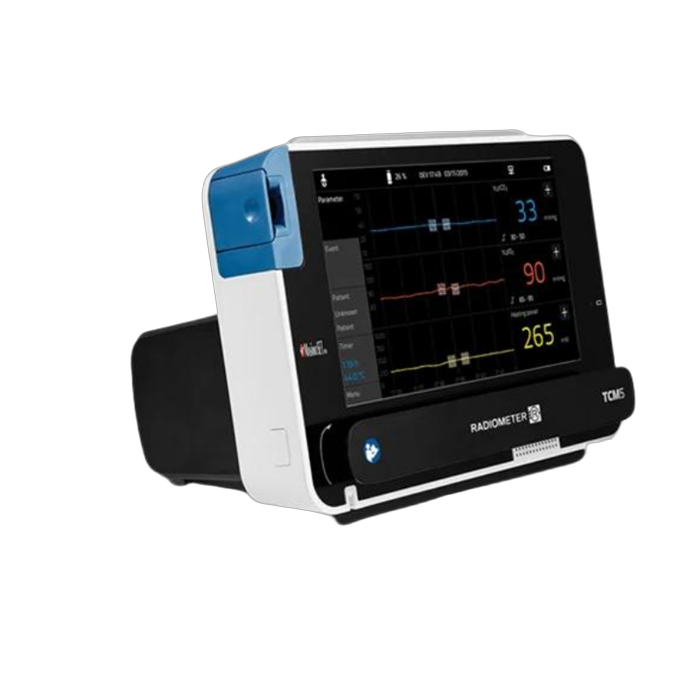
- Combined Transcutaneous Oxygen and Carbon Dioxide Monitor (TCOM/TCCO2): This type of monitor measures both oxygen and carbon dioxide levels in the blood by placing a sensor on the skin. It is commonly used in critical care units to monitor patients with respiratory failure.
- Transcutaneous Bilirubin Monitor (TcB): This type of monitor measures the bilirubin levels in the blood by placing a sensor on the skin. It is commonly used in neonatal units to screen for jaundice in newborns.
- Transcutaneous Electrical Nerve Stimulation (TENS) Monitor: This type of monitor uses electrical impulses to stimulate nerves and relieve pain. It is commonly used in physical therapy and pain management.
- Accuracy: The monitor should provide accurate readings of the patient's oxygen and carbon dioxide levels.
- Ease of use: The monitor should be easy to use and operate, with clear instructions and a user-friendly interface.
- Portability: The monitor should be lightweight and portable, allowing for easy transport between different patient locations.
- Battery life: The monitor should have a long battery life to ensure it can be used for extended periods without needing to be recharged.
- Durability: The monitor should be durable and able to withstand regular use in a clinical setting.
- Data storage: The monitor should have the ability to store and retrieve patient data for future reference.
- Alarm settings: The monitor should have adjustable alarm settings to alert healthcare providers of any significant changes in the patient's oxygen or carbon dioxide levels.
Transcutaneous Monitor Costs and Supplier Insights
Why choose a supplier in Sydney for Transcutaneous Monitor Quotes?
If you are in Sydney and considering purchasing a Transcutaneous Monitor, it's worth considering Sydney-based suppliers. Doing so offers several benefits that are particularly relevant to businesses in the area. Here are the top reasons why opting for a local Sydney supplier can be the best decision for your Transcutaneous Monitor buying needs.
Trustworthy Transcutaneous Monitor Procurement in SydneyTrust your Transcutaneous Monitor procurement with Sydney suppliers known for their reliability and commitment to quality.
Support Sydney's Economy by Buying LocallyBoost Sydney's economy and foster community development by purchasing from local suppliers.
Custom Solutions from Sydney SuppliersGet Transcutaneous Monitor solutions that meet your exact needs from local suppliers. Tailor-made products ensure maximum efficiency and satisfaction.
Immediate Assistance in SydneyEnjoy immediate assistance and troubleshooting in Sydney. Fast resolution keeps your operations running smoothly.
Secure Your Inventory with Local SuppliersSecure your Transcutaneous Monitor inventory by partnering with local suppliers in Sydney. Reduce the likelihood of stock shortages and logistical issues.
Lower Carbon EmissionsContribute to lower carbon emissions by buying a Transcutaneous Monitor from Sydney. Shorter supply routes mean significantly reduced environmental impact.
Buy a Transcutaneous Monitor Near Me

 Reach valuable medical buyers in minutes
 Promote key products & content
 Drive cost effective & measurable sales