Kinestica Rehabilitation Device | Bimeo ...
Kinestica - Rehabilitation Device | Bimeo PRO
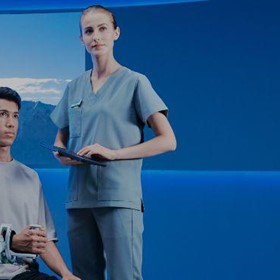
Bimeo PRO is a sensor based rehabilitation device for post-stroke and other neurological patients.
The patient is involved in a motivating virtual reality environment. Bimeo is designed to make therapy effective and motivating for patients and facilitating for therapists. Therapy with Bimeo goes one step beyond state-of-the-art methods in rehabilitation medicine. The patient is encouraged to use the more affected arm, supported by the movement of the less affected arm. The support is supervised and optimized through automatic therapy task adaptation. Therapy is augmented with activity-of-daily-living type exercises and cognitive tasks, while specific tasks are designed for objective motor function assessment. Physicians can easily track progress of the patient and adjust therapy difficulty according to the patient’s needs. Therapy is therefore more effective and the rehabilitation process shorter.
Therapy Modes
Therapy with Bimeo PRO offers wide variety of modes. Different therapy modes require different therapeutic attachments. With help of a quick release mechanism, attachments can be easily exchanged and the new therapy can be started simply by a few clicks in a simple user interface.
Bimanual mode
Arms are coupled to provide necessary assistance or resistance during movement. The coupling of arms enables controlled movement of the more affected arm in free space and in gravity minimized position. It enables the assessment and evaluation of passive arm range of motion.
Unimanual Mode
Therapy of the more affected arm in free space or gravity minimized position. It enables the assessment and evaluation of active arm range of motion.
Isolated Arm Joint Mode
Isolated therapy of individual arm joints: shoulder (flexion/extension, abduction/adduction, internal rotation), elbow (flexion/extension), wrist (flexion/extension, pronation/supination, ulnar/radial deviation).
Unimanual Mode with Support
Therapy of the more affected arm with arm weight compensation on support surface. It enables the assessment and evaluation of active arm range of motion.
Bimanual Mode with Support
Less affected arm assists or resists more affected arm movements with weight compensation on support surface. It enables the assessment and evaluation of passive arm range of motion.
Support Sphere Mode
Isolated wrist therapy with support and assessment of active joint range of motion.
Therapy Tasks
Therapy tasks of the Bimeo PRO system are comprised of two groups. The first group are assessment task. Aim of the first group is to encourage the patient to perform simple isolated movements as accurate as possible. Algorithms of the Bimeo PRO system accurately and objectively assess each patient’s movement. Assessment scores for each session are stored into a database. This way the physician or therapist can objectively monitor progress of each patient.
Benefits
Patient motivation
Bimeo uses virtual reality gaming to enhance patient motivation. The positive impact of virtual reality in rehabilitation is scientifically validated.
Objective patient assessment
Data acquired by sensors and specific tasks enable an objective insight into the patients state and progress.
Wide variety of therapy options
Therapists can prescribe wide variety of therapy options: arm-weight (un)supported isotonic/isometric bimanual and unimanual, isolated exercise of individual arm joints and active assisted movement controlled by the therapist.
Ease of use
Bimeo is simple and intuitive. The therapist adjusts therapy settings with just a few clicks on a straightforward user interface. The settings are stored and later retrieved when starting a new therapy session.
Short setup time
The whole setup and initialization process takes just a minute without disturbing the patient.
Reduced therapy costs
A single therapist can simultaneously assist multiple patients exercising with Bimeo.
Evidence based rehabilitation
Patients benefit from clinically validated rehabilitation therapy.
No risk of injury
The system consists of lightweight battery-powered sensing units without actuators, thus completely eliminating the risk of injury to the patient or therapist.
Indications
Bimeo PRO was primarily designed for post stroke and patients with neuromotoric disorders, but during initial clinical trials therapists have successfully threated many types of different pathologies. Bimeo has been tested and successfully used in following indications:
- Stroke - cerebrovascular accident (CVA),
- Traumatic brain injury (TBI),
- Spinal cord injury (SCI),
- Amyotrophic lateral sclerosis (ALS),
- Multiple sclerosis (MS),
- General traumatic injury,
- and other.
To contact AIMedical International about Kinestica Rehabilitation Device | Bimeo PRO use Get a quote.
- Your delivery location?
- NSW
- VIC
- QLD
- SA
- WA
- NT
- ACT
- TAS
- New Zealand
- Papua New Guinea
- Afghanistan
- Albania
- Algeria
- Andorra
- Angola
- Antigua and Barbuda
- Argentina
- Armenia
- Austria
- Azerbaijan
- Bahamas
- Bahrain
- Bangladesh
- Barbados
- Belarus
- Belgium
- Belize
- Benin
- Bhutan
- Bolivia
- Bosnia and Herzegovina
- Botswana
- Brazil
- Brunei
- Bulgaria
- Burkina Faso
- Burma
- Burundi
- Cabo Verde
- Cambodia
- Cameroon
- Canada
- Central African Republic
- Chad
- Chile
- China
- Colombia
- Comoros
- Congo (Brazzaville)
- Congo (Kinshasa)
- Costa Rica
- Côte d'Ivoire
- Croatia
- Cuba
- Cyprus
- Czechia
- Denmark
- Djibouti
- Dominica
- Dominican Republic
- Ecuador
- Egypt
- El Salvador
- Equatorial Guinea
- Eritrea
- Estonia
- Ethiopia
- Fiji
- Finland
- France
- Gabon
- Gambia
- Georgia
- Germany
- Ghana
- Greece
- Grenada
- Guatemala
- Guinea
- Guinea-Bissau
- Guyana
- Haiti
- Holy See
- Honduras
- Hungary
- Iceland
- India
- Indonesia
- Iran
- Iraq
- Ireland
- Israel
- Italy
- Jamaica
- Japan
- Jordan
- Kazakhstan
- Kenya
- Kiribati
- Korea, North
- Korea, South
- Kosovo
- Kuwait
- Kyrgyzstan
- Laos
- Latvia
- Lebanon
- Lesotho
- Liberia
- Libya
- Liechtenstein
- Lithuania
- Luxembourg
- Macedonia
- Madagascar
- Malawi
- Malaysia
- Maldives
- Mali
- Malta
- Marshall Islands
- Mauritania
- Mauritius
- Mexico
- Federated States of Micronesia
- Moldova
- Monaco
- Mongolia
- Montenegro
- Morocco
- Mozambique
- Namibia
- Nauru
- Nepal
- Netherlands
- New Zealand
- Nicaragua
- Niger
- Nigeria
- Norway
- Oman
- Pakistan
- Palau
- Panama
- Papua New Guinea
- Paraguay
- Peru
- Philippines
- Poland
- Portugal
- Qatar
- Romania
- Russia
- Rwanda
- Saint Kitts and Nevis
- Saint Lucia
- Saint Vincent and the Grenadines
- Samoa
- San Marino
- Sao Tome and Principe
- Saudi Arabia
- Senegal
- Serbia
- Seychelles
- Sierra Leone
- Singapore
- Slovakia
- Slovenia
- Solomon Islands
- Somalia
- South Africa
- South Sudan
- Spain
- Sri Lanka
- Sudan
- Suriname
- Swaziland
- Sweden
- Switzerland
- Syria
- Taiwan
- Tajikistan
- Tanzania
- Thailand
- Timor-Leste
- Togo
- Tonga
- Trinidad and Tobago
- Tunisia
- Turkey
- Turkmenistan
- Tuvalu
- Uganda
- Ukraine
- United Arab Emirates
- United Kingdom
- United States
- Uruguay
- Uzbekistan
- Vanuatu
- Venezuela
- Vietnam
- Yemen
- Zambia
- Zimbabwe
Upper limb disabilities Robot
Galileo Vibration Training | Exercise Machine/Therapy
TMS Transcranial Magnetic Stimulator
Motion Capture Camera | MOCAP Camera | Arqus A26
Treadmill - gaitway
Treadmill - locomotion
Rehab Hub - Rehabilitation Trainer
Cell Training System | CellAir Activ
Repetitive Transcranial Magnetic Stimulation (rTMS)
Treadmill | Pluto Med Treadmill
Motion Capture Camera | Miqus MOCAP
Rehabilitation Device | OTParvos TM
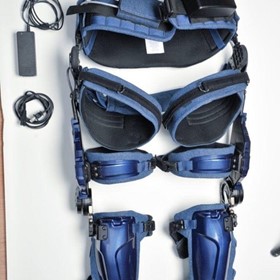
Rehabilitation Device | Keeogo TM - Dermoskeleton
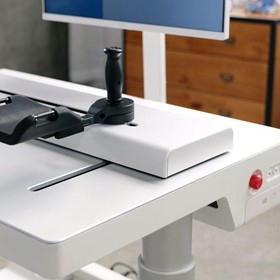
Rehabilitation Device | ArmMotus M2 Pro
Arm Ergometer Torqualizer®
Bike ergometer - torqualizer® recumbent ef med 600
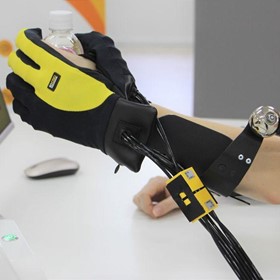
Rehabilitation Device | EsoGLOVE - Hand Rehabilitation System
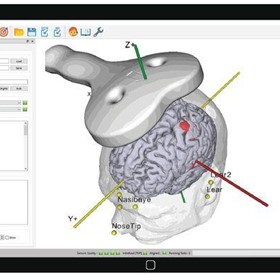
Neural Navigator
Phenotyping Systems | TSE - Multi Conditioning Solution
Rotarod Performance Test | RotaRod-Motor Coordination & Motor Learning
Rehab Hub - Rehabilitation Trainer
Rehabilitation Device | TMG - Teniomuography
Rehabilitation Device | DD SystemTM Pro
Rehabilitation Device | EsoGLOVE - Hand Rehabilitation System
Rehabilitation Device | ArmMotus M2 Pro
Rehabilitation Device | Keeogo TM - Dermoskeleton
Rehabilitation Device | OTParvos TM
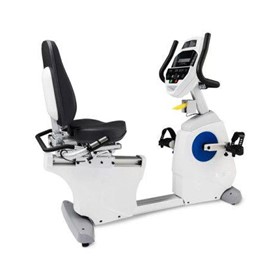
Dyaco Medical 7.0r Rehabilitation Recumbent Bike
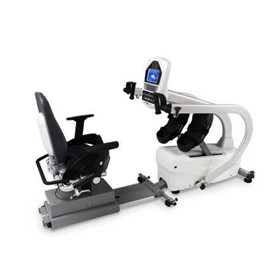
Dyaco Medical 7.5s Rehabilitation Recumbent Seated Stepper
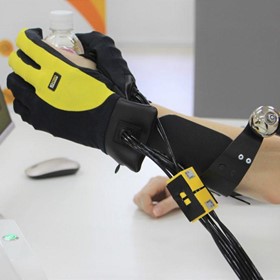
Soft Robotic Hand Rehabilitation System | EsoGLOVE Pro
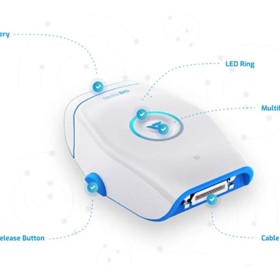
Rehabilitation Diagnostic Robots | Portable EMG & FES Device
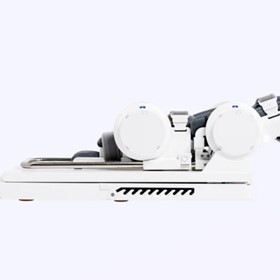
Smart Robotic Upper & Lower Limb Rehabilitation Device | rebless™
Rehabilitation Arms | Emu
Neurological Rehabilitation SaeboGlove
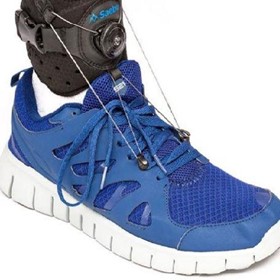
SaeboStep | Rehabilitation Braces
Neurological Rehabilitation SaeboMAS Mobile Arm Support
Neurological Rehabilitation SaeboStretch
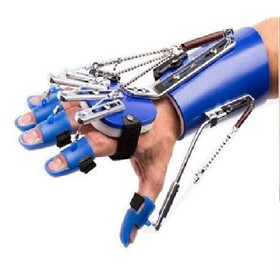
Neurological Rehabilitation SaeboFlex Orthosis
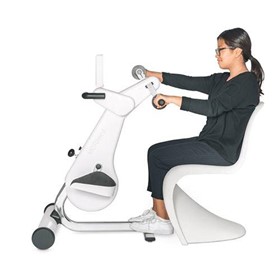
Rehabilitation Device | Motomed Loop Light LA
Thanks for your help!
Sorry! Unable to submit your request at this time. Please try again later.
Report this product